Background

Scalping Trading Strategies: The Complete Guide (2026)

Master every scalping strategy — VWAP, EMA, ORB, order flow & options scalping on Nifty and Bank Nifty. Built for Indian traders.

Author Image

Team Sahi

Published: 14 Apr 2026, 10:46 PM IST (4 days ago)
Last Updated: 16 Apr 2026, 02:23 PM IST (2 days ago)
10 min read

Learn How to Trade Small Moves Consistently

Scalping is one of the most popular trading styles for active traders—especially in fast-moving markets like Nifty and Bank Nifty. But while many try it, very few do it consistently.


What's Inside This Guide

  1. What Is Scalping in Trading?
  2. How Scalping Actually Works (Most People Get This Wrong)
  3. The Complete Scalping Strategy Framework
  4. Choosing the Right Scalping Strategy
  5. Execution: The Real Edge
  6. Risk Management for Scalpers
  7. The Psychology of Scalping
  8. Tools & Setup You Need
  9. Best Markets for Scalping in India
  10. Scalping vs. Intraday Trading
  11. Tax Implications for Scalpers in India
  12. FAQs

What Is Scalping in Trading?

Scalping is a short-term trading strategy where traders aim to capture small price movements — repeatedly — throughout the trading day. Positions are typically held for seconds to minutes. Unlike swing trading or investing, scalping is not about catching large trends. It is about exploiting micro-movements in highly liquid instruments with precision entries, tight stops, and rapid exits.

The math behind scalping is straightforward: instead of waiting for one trade to produce ₹5,000 in profit, a scalper targets ten trades that produce ₹500 each. Smaller price movements are statistically more frequent than large ones, which is why the approach works — provided execution and discipline are airtight.

In the Indian context, scalping is most commonly practised in the F&O segment — particularly Nifty 50 options (lot size: 65, weekly expiry every Tuesday) and Bank Nifty options (lot size: 30, monthly expiry on the last Tuesday). These instruments offer the liquidity, tight spreads, and intraday volatility that scalping requires.

The core characteristics that define scalping:

  • High trade frequency: 05–10+ trades per session, depending on strategy and market conditions.
  • Small profit per trade: Targeting 0.1–0.5% per trade, or 5–20 points in index option premiums.
  • Tight risk management: Stop-losses of 0.5–1% of capital per trade, with hard daily loss limits.
  • Precision execution: Every second matters. Latency, spreads, and order type directly impact profitability.
  • No overnight exposure: All positions are closed before the market ends at 3:30 PM IST.

How Scalping Actually Works (Most People Get This Wrong)

The most common misconception about scalping is that it's purely about speed — fast entries and fast exits. Beginners often assume that if they can click fast enough, profits will follow.

This is wrong. Speed without structure is just overtrading.

Profitable scalping depends on four pillars, and the strategy itself is only one of them:

The Four Pillars of Profitable Scalping

1. Market Condition Recognition (before you trade)
Is the market trending, ranging, or choppy? A momentum strategy in a choppy market will bleed your account through whipsaws. A mean reversion strategy in a strong trend will get you run over. The first decision a professional scalper makes each morning is not "what to trade" but "what type of market is this?"

2. Strategy Selection (matching setup to conditions)
Each scalping strategy has an optimal environment. For example, the VWAP pullback scalping works beautifully in trending markets where price respects the volume-weighted average as dynamic support or resistance. Bollinger Band mean reversion works in sideways markets. ORB (Opening Range Breakout) exploits the first 15–30 minutes of volatility. Using the wrong strategy in the wrong conditions is the single biggest reason scalpers lose money.

3. Execution Quality (how you trade)
Execution covers everything from broker speed and latency to order type selection (limit vs. market), spread management, and position sizing. In scalping, where the target is often just 5–15 points, the difference between a market order and a well-placed limit order can be the difference between a winning and losing trade.

4. Psychological Control (how long you survive)
Scalping generates high decision frequency — and with it, decision fatigue. Revenge trading after losses, overtrading during flat markets, and ignoring stop-losses because "it'll come back" are the killers. A scalper without emotional discipline is a scalper with a ticking clock.

Key Insight: The strategy is 30–40% of the edge. Execution + discipline + market-condition reading = the remaining 60–70%. Most educational content focuses exclusively on strategy. This guide covers all four pillars.

The Complete Scalping Strategy Framework

Every scalping strategy falls into one of six categories. Understanding which category a strategy belongs to, and what market conditions it thrives in — is more important than memorising entry rules. Here's the complete framework.

1. Price Action Scalping (Pure Trading)

Price action scalping is the purest form — no indicators, no overlays. You read the chart itself: candlestick structure, support/resistance levels, and the micro-behaviour of price at key zones.

Core Setups

Support & Resistance Flips
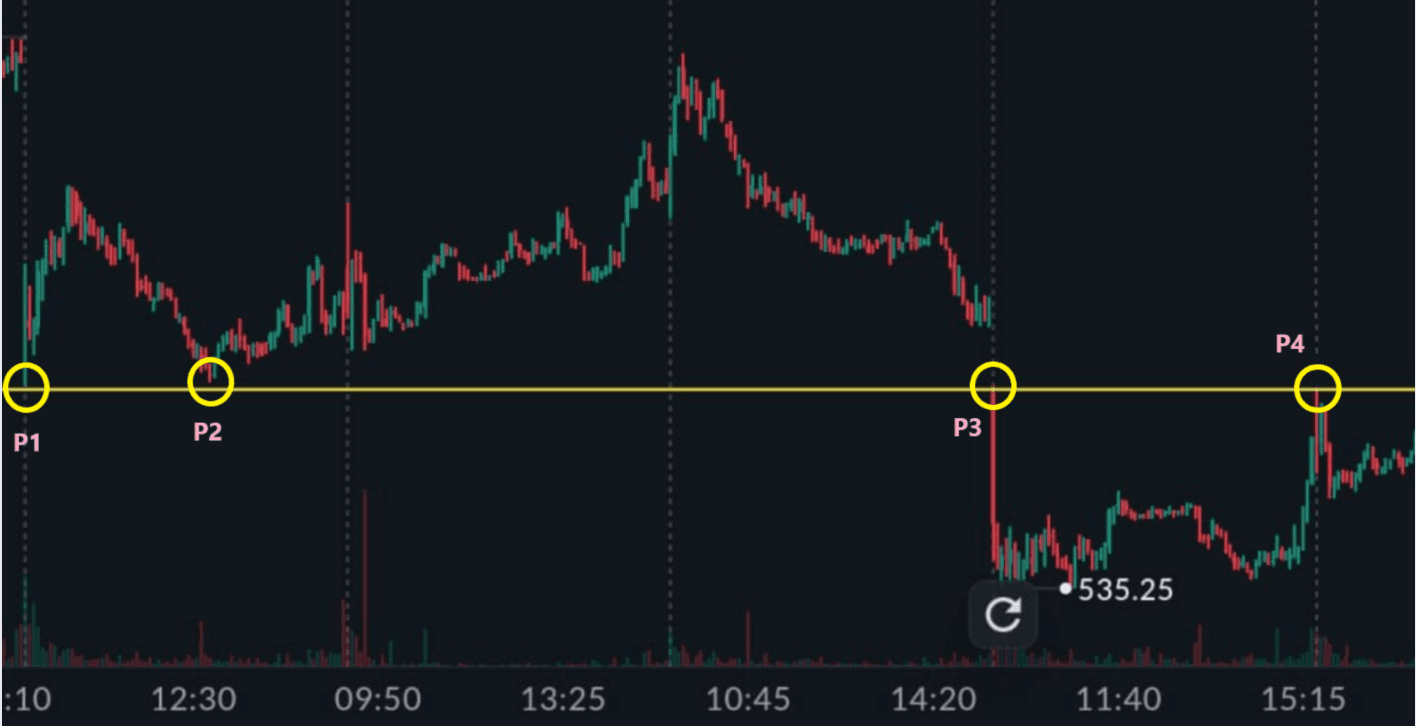
When a resistance level breaks and price retests it from above, that former resistance becomes support. Scalpers enter long on the retest with a stop below the level. Have a detailed read on understanding support and resistance levels here. The inverse applies for support-to-resistance flips. This is one of the highest-probability setups in scalping because the level has already been validated by the market.

Break of Structure (BOS)
In an uptrend, price makes higher highs and higher lows. A break of structure occurs when price breaks below the most recent higher low — signalling a potential shift in short-term direction. Scalpers use BOS to identify early trend reversals on 1-minute or 3-minute charts.


The key is waiting for the break to confirm (a close below the level) rather than anticipating it.

Liquidity Sweeps
Markets don't move in straight lines. Before large moves, price often sweeps beyond a key level, taking out stop-losses clustered there — before reversing sharply in the opposite direction. Recognising this pattern is a significant edge: you wait for the sweep to complete, then enter in the true direction. This concept is central to Smart Money / ICT-style trading frameworks and is covered in depth in our Liquidity Sweep Scalping Guide.

Micro Trendline Breaks
Drawing short trendlines on 1-minute charts across 3–5 candle highs or lows creates micro-structure. When price breaks this micro-trendline with volume, it often signals a short-term reversal or acceleration. These are fast setups — entry to exit in under 2 minutes.

Candle Patterns (Engulfing, Pin Bars, Dojis)
On lower timeframes, individual candle patterns matter less than on daily charts — but at key levels, they provide confirmation. A bullish engulfing candle at a support level, for instance, is a stronger signal than the same candle in the middle of a range.

Best for: Discretionary traders · Skill level: Intermediate+ · Market: Trending, volatile

Pro Tip: Price action scalping rewards pattern recognition that comes from screen time. Use Sahi's Practice Mode to replay historical market sessions and practise identifying these setups without risking capital. 

2. Indicator-Based Scalping

Indicator-based scalping uses technical indicators as the primary decision layer. This is where most beginners start — and where most beginners make mistakes, because indicators lag price. The key is using indicators for confirmation, not prediction.

VWAP Scalping

VWAP (Volume Weighted Average Price) calculates the average price weighted by volume throughout the trading session. It represents institutional "fair value" for the day and is arguably the single most important indicator for intraday scalpers.

VWAP Pullback Scalping: In a trending market, price pulls back to VWAP and bounces. The setup: wait for price to trade above VWAP (bullish bias), then enter long when price dips to VWAP and shows rejection (a wick, an engulfing candle, or a volume spike at VWAP). Stop below the most recent swing low. Target: 1:1.5 or 1:2 risk-reward.

VWAP Breakout Scalping: When price is consolidating near VWAP and then breaks decisively above or below it on volume, this signals a directional move. The break confirms the institutional bias for the session.

Sahi charts include real-time VWAP with every-second refresh, covering both NSE and BSE indices — built bottom-up from constituent-level live data, not scraped from delayed summary feeds.

EMA Crossover Scalping

The Exponential Moving Average (EMA) gives more weight to recent prices than the SMA, making it faster and more responsive — exactly what scalpers need.

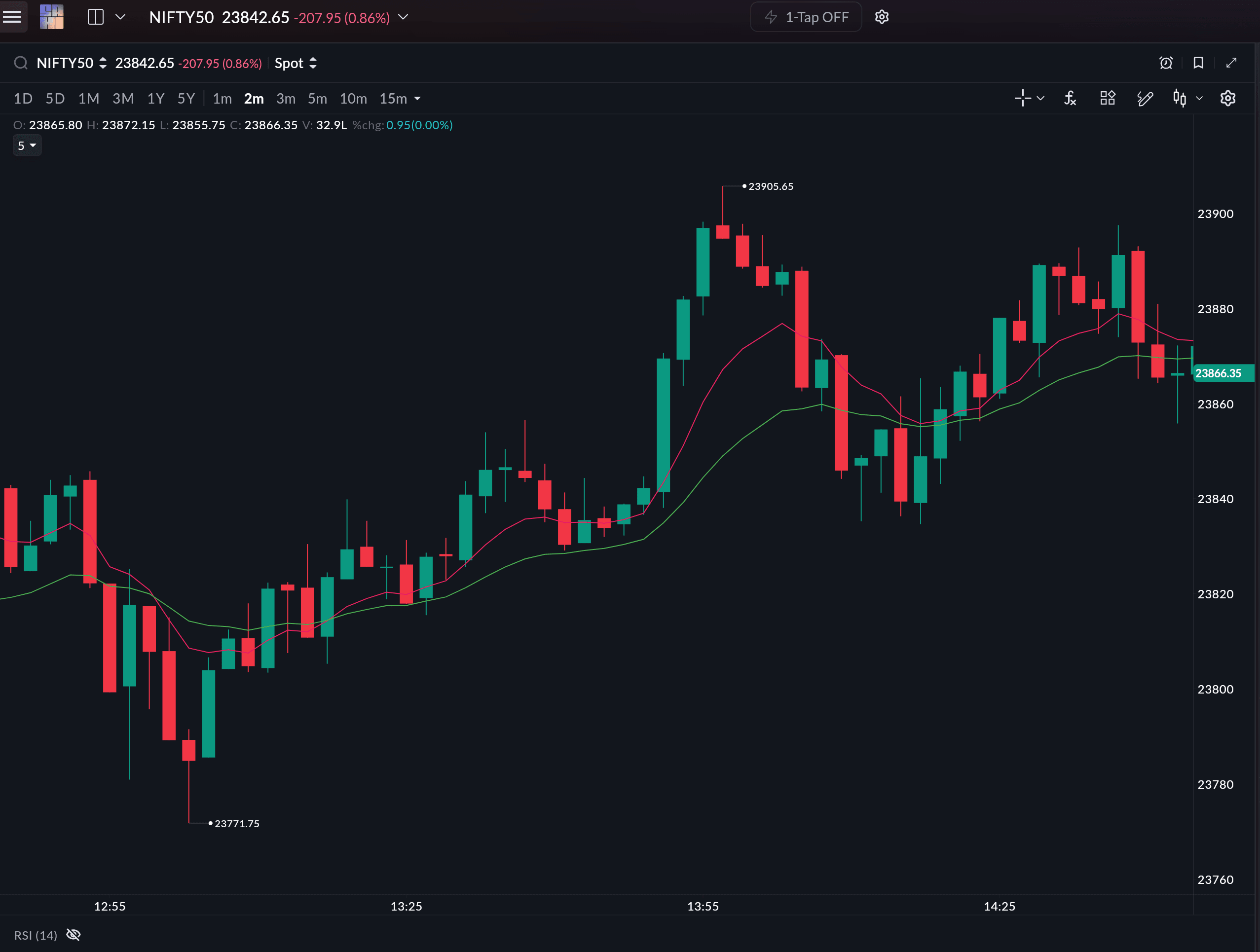
9/21 EMA Crossover Setup: Add a 9-period EMA (fast) and a 21-period EMA (slow) to your 1-minute or 3-minute chart. When the 9 EMA crosses above the 21 EMA after a pullback, with volume confirmation, it signals short-term bullish momentum. Enter on the crossover candle or the first pullback to the 9 EMA. Stop below the 21 EMA. Exit when the 9 EMA crosses back below, or at a pre-defined target.

For short trades, the setup reverses: 9 EMA crossing below 21 EMA with price rejecting from above.

On Sahi, you can add EMAs from the Indicators panel and choose the Moving Average Crossover indicator to automatically detect crossovers — including choosing between SMA, EMA, and Hull MA types.

RSI Scalping

The RSI (Relative Strength Index) measures momentum on a 0–100 scale. The default period is 14, but for scalping, traders often shorten it to 7 or 9 for faster signals.

RSI Divergence Scalping: When price makes a lower low but RSI makes a higher low (bullish divergence), it signals weakening selling momentum — a potential reversal. This works best at key support levels on a 1-minute or 3-minute chart. The inverse (bearish divergence) applies at resistance.

RSI Overbought/Oversold: On lower timeframes, RSI reaching extreme levels (below 20 or above 80 with a shortened period) at a key level can provide confirmation for a scalp entry. But — and this is critical — RSI overbought in a strong trend is not a sell signal. Context always trumps indicator readings.

Sahi now supports smoothened RSI values to reduce false signals, plus the ability to stack multiple RSI instances on a single chart for comparing different lookback periods.

Bollinger Band Scalping

Bollinger Bands measure volatility using a 20-period SMA with upper and lower bands at 2 standard deviations. They serve two primary scalping functions:

Mean Reversion: When price touches the lower band with RSI below 30, look for a long entry expecting a move back to the middle band (the SMA). When price touches the upper band with RSI above 70, look for a short. This works in range-bound, sideways markets — not trending ones.

Squeeze Breakout: When the bands contract tightly (a "squeeze"), it signals low volatility — which typically precedes a sharp breakout. Scalpers wait for the squeeze, then enter on the first decisive candle that closes outside the band with volume confirmation. Combine with EMA crossover for directional confirmation.

Common Mistake: Beginners often over-rely on indicators alone, treating them as buy/sell signals. No indicator predicts the future — they all describe what has already happened. Always pair indicator signals with price action context (key levels, volume, candle structure) and market condition awareness.

3. Momentum & Breakout Scalping

Momentum strategies exploit directional conviction — periods when price is moving fast and decisively. The goal is to ride the momentum wave for a short burst, then exit before it exhausts.

Opening Range Breakout (ORB)

The Opening Range Breakout (ORB) is one of the most popular momentum strategies for Indian markets, and for good reason: the first 15–30 minutes after the 9:15 AM open contain the highest-information-density price action of the day.

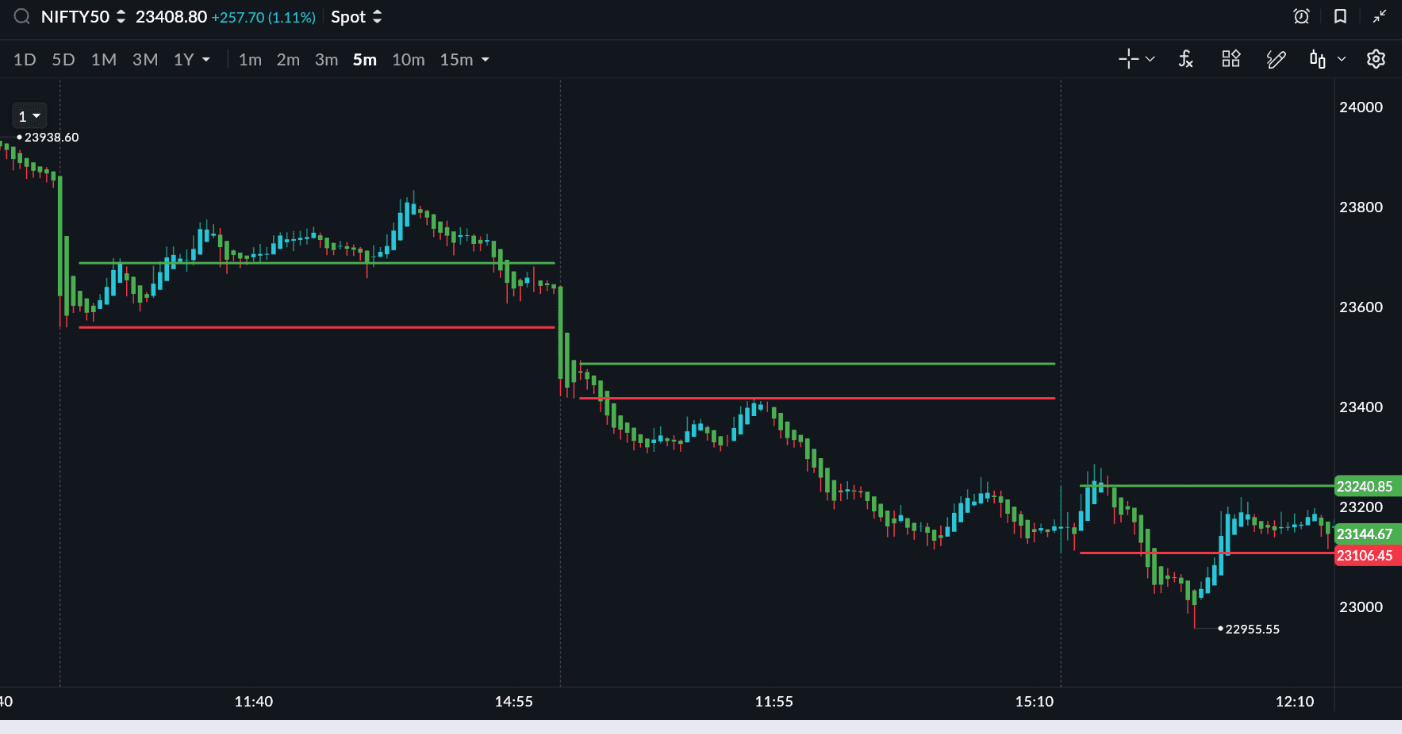
How it works: Mark the high and low of the first 15 minutes (9:15–9:30 AM). If price breaks above the high with volume, go long. If it breaks below the low, go short. Stop-loss: opposite end of the range. Target: 1:1 to 1:2 risk-reward, or trail using 9 EMA on a 1-minute chart.

On Sahi: The ORB levels are auto-plotted directly on the chart — you don't need to draw them manually. The opening range high (ORH) and low (ORL) appear automatically, so you can focus entirely on the breakout confirmation.

Volume Breakout Scalps

When a stock or index consolidates on declining volume and then breaks out on a sudden volume surge (2–3x average), it signals institutional participation. Enter on the breakout candle, stop below the consolidation range, target 1:1.5 R.

Gap-and-Go Setups

When the market gaps up or down significantly at open (driven by overnight global cues), the first 5–10 minutes often produce continuation momentum. Scalpers who identify the gap direction and trade in that direction during the initial momentum burst can capture fast profits — but false gaps are common, so confirmation from volume and VWAP is essential.

4. Mean Reversion Scalping

Mean reversion is the opposite of momentum: instead of trading in the direction of a move, you bet on price returning to an average. This works when markets are ranging and volatility is compressing.

VWAP Reversion: When price extends significantly above or below VWAP during a sideways session, it often snaps back. Enter when price reaches an extreme distance from VWAP (observe the typical range for that instrument) and shows a reversal candle. Target: VWAP itself. Stop: beyond the extreme.

Bollinger Mean Reversion: As described in the indicator section — buy at the lower band, sell at the upper band, target the middle. Works in sideways markets only.

Range-Bound Scalping: Identify a clear range (horizontal support and resistance) on a 5-minute chart, then scalp the bounces on a 1-minute chart. Buy at range support, sell at range resistance, stop outside the range.

Failed Breakout Trades: One of the highest-probability mean reversion setups. Price breaks above resistance (or below support), triggers breakout traders, then immediately reverses back into the range. The breakout was a "fake-out," and the liquidity sweep discussed earlier is in play. Enter on the reversal with a tight stop beyond the false breakout wick.

Key Risk: Mean reversion in a trending market means "catching a falling knife." The number one risk is entering a reversion trade during a genuine breakout. Always confirm the market is actually ranging before applying these setups. A flat VWAP and contracting Bollinger Bands are your best confirmation tools.

5. Order Flow & Tape Reading

Order flow analysis goes beyond price and indicators to examine who is trading and how aggressively. It reads the actual bid-ask data, trade-by-trade execution, and volume at specific price levels. This is the realm of advanced scalpers — but even a basic understanding of order flow concepts can significantly improve your entries and exits.

Bid-Ask Imbalance

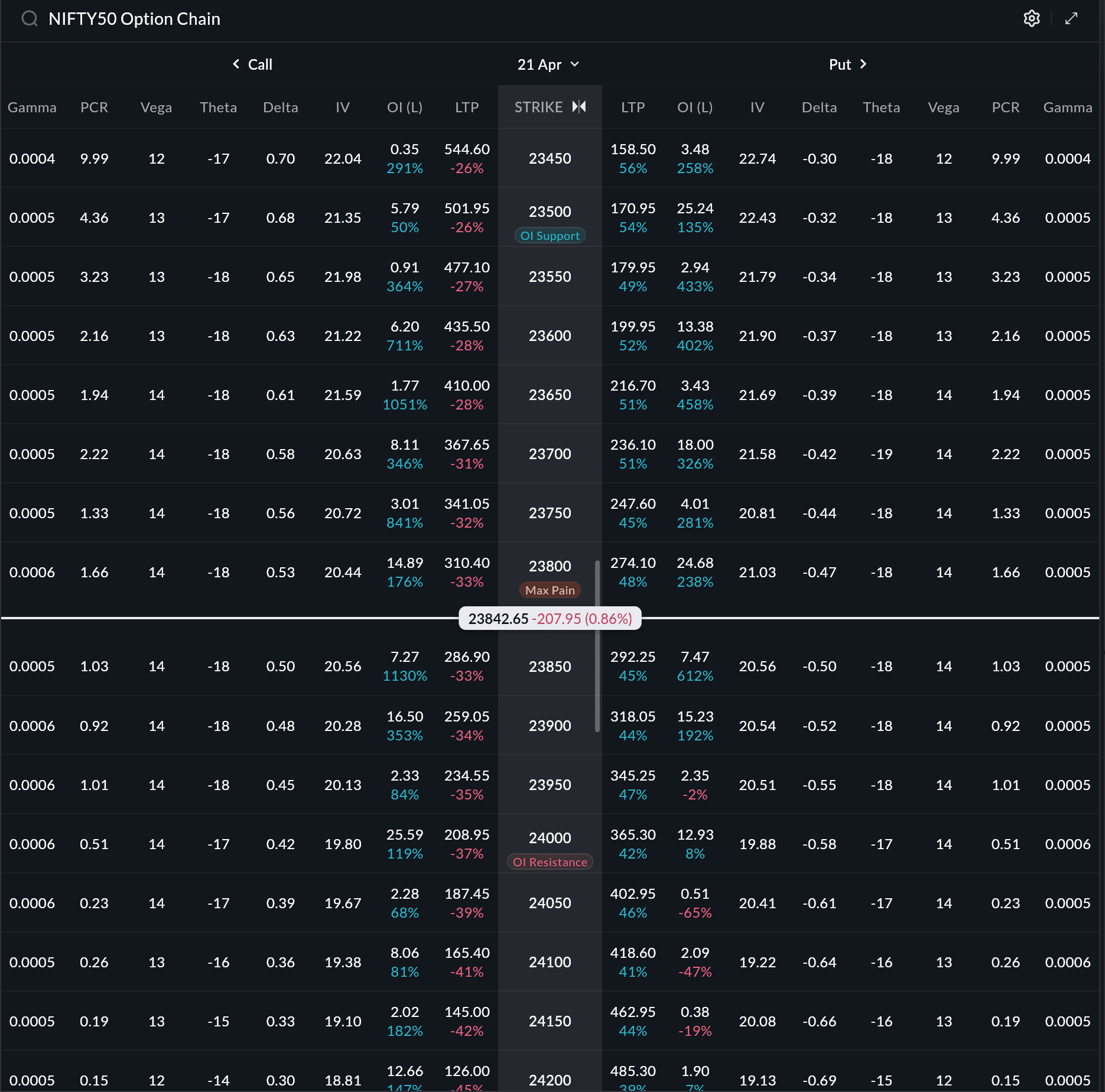
When buy orders on the bid side significantly outweigh sell orders on the ask — or vice versa — it creates an imbalance. A strong bid-side imbalance at a support level often precedes an upward move. Scalpers read this from Level 2 / Market Depth data. On Sahi's Scalper Mode, the live Option Chain provides OI, OI change, and Greeks data within the same screen where you execute — giving you a fast read on positioning without switching screens.

Tape Reading (Time & Sales)

The "tape" shows every trade that executes — price, quantity, and whether it hit the bid or the ask. Reading the tape means identifying large block orders, aggressive buying (trades hitting the ask repeatedly), or absorption (large limit orders absorbing incoming selling without letting price fall). This is the most raw form of order flow.

Absorption Signals

When price is falling but large buyers are absorbing the selling at a specific level — visible through volume clusters in the market depth — it indicates institutional demand. The price stops falling despite aggressive selling. This is a high-probability reversal signal for scalpers.

Delta Divergence

Delta is the difference between buy and sell volume at a price level. When price makes a new high but delta is declining (fewer aggressive buyers), the move is losing conviction. This divergence often precedes a reversal. Advanced scalpers use footprint charts (volume at each price level) to visualise delta — these aren't available on most retail platforms but the concept can be approximated using OI change and volume data.

Sahi Feature: The live Option Chain inside Scalper Mode shows strike-wise OI, OI change, and option Greeks — all on the same screen where you place trades. Combined with Buildup Scanners (long buildup, short buildup, short covering, long unwinding), you get real-time institutional positioning data without switching a single screen.

6. Options Scalping (India Focus)

This is where the largest opportunity sits for Indian retail traders — and where the most capital is lost. Options scalping on Nifty and Bank Nifty is the dominant form of active trading in India, and understanding its nuances is non-negotiable if you trade F&O.

Why Options for Scalping?

Options provide leverage without the full margin requirement of futures. A Nifty option lot (65 units) at an ATM premium of ₹150 costs ₹9,750 to enter. While a futures contract would require margins of ₹1.5 lakh+. This accessibility makes options the instrument of choice for retail scalpers. But it also introduces a variable that futures don't have: time decay (theta).

ATM Options Scalping

At-the-money (ATM) options have the highest gamma — meaning their premiums react fastest to underlying price movements. This is why scalpers overwhelmingly trade ATM strikes. A 50-point move in Nifty translates to roughly a 25–35 point move in an ATM option premium (depending on volatility and time to expiry). That's ₹1,625–₹2,275 per lot on a Nifty ATM CE or PE.

Setup: Identify your directional bias using any of the scalping strategies above (VWAP, EMA, price action). Then execute through the ATM option on the relevant side — CE for bullish, PE for bearish. Stop and target are defined in premium points.

Expiry Day Scalping

Nifty weekly expiry (every Tuesday) is the most volatile and the most opportunity-rich session for options scalpers. On expiry day, theta decay accelerates dramatically — ATM options that started the day at ₹100+ can decay to ₹5 by 3:00 PM if the market stays flat. This creates two distinct strategies:

For option buyers: Trade only when you have high directional conviction. Time is working against you every second. Enter, get your target, and exit — no holding.

For option sellers: Sell OTM options early in the day and let theta work in your favour. The risk: a sudden directional move that makes the sold option go ITM. Position sizing and hedging (through spreads) are critical. Note that SEBI now requires increased tail risk coverage on expiry days — read the full expiry day rules.

Option Chain-Based Entries

The option chain itself provides scalping signals. Watch for: sudden OI buildup at a specific strike (indicates institutional hedging or positioning at that level), PCR (Put-Call Ratio) shifts, and max pain convergence. When the option chain confirms your price action or indicator signal, the trade has higher conviction.

Premium Decay Scalping (Theta Scalping)

Sell ATM or slightly OTM options during low-volatility periods and profit from time decay. This is not "set and forget" — it requires active management and hedging. But for experienced scalpers who understand Greeks behaviour, theta scalping can be highly consistent.

Index Lot Size (2026) Weekly Expiry Monthly Expiry Best For
Nifty 50 65 Every Tuesday Last Tuesday Highest liquidity, tightest spreads, most scalping-friendly
Bank Nifty 30 No weekly (discontinued Nov 2024) Last Tuesday Higher intraday moves, banking sector directional bets
Sensex (BSE) 20 Every Thursday Last Thursday Lower liquidity; wider spreads — less ideal for scalping

Best for: NSE traders · Skill level: Intermediate to Advanced · Market: Expiry days, high volatility

Sahi Scalper Mode: Scalper 2.0 was rebuilt from the ground up for options scalpers. Key features: 60% faster chart rendering, limit SL/TP orders (not just market), synced dual charts (index + option), live Option Chain inside Scalper, configurable trailing stop-loss logic, and Super Alerts that notify you when your setup appears. Read the full Scalper 2.0 breakdown →

7. Algorithmic Scalping

Algorithmic (algo) scalping uses rule-based systems — often coded as trading bots — to execute scalping strategies automatically. The appeal is obvious: no emotional interference, no fatigue, and the ability to process information faster than any human.

Rule-Based Systems: Define your entry, exit, stop-loss, and position sizing rules mathematically. If conditions A, B, and C are true → enter. If condition D is true → exit. The rules are the same ones you'd use manually, but execution is automated.

Backtesting: Before going live, test your algo on historical data. Does it produce a positive expectancy over hundreds or thousands of trades? What's the maximum drawdown? What's the win rate? Backtesting doesn't guarantee future results, but it eliminates obviously bad strategies.

Important: SEBI Algo Regulations (April 2026)
As of April 1, 2026, SEBI requires every algorithmic order to carry a unique Algo-ID registered with the exchange. Unregistered algos cannot legally trade on Indian exchanges. Your broker must be SEBI-compliant, and your algo platform must go through registration, backtesting documentation, and pre-trade risk checks. Manual scalping is not affected by these regulations — only automated strategies.

Choosing the Right Scalping Strategy

The question isn't "which strategy is best?" It's "which strategy matches today's market conditions, my skill level, and my instrument?"

Before each session, answer these four questions:

  1. Is the market trending or ranging? Check the 15-minute chart. Is price making higher highs / higher lows (trend) or oscillating between horizontal levels (range)? A flat VWAP and contracting Bollinger Bands confirm a ranging market.
  2. What is volatility like? Check India VIX. High VIX (above 18–20) favours momentum and breakout strategies. Low VIX favours mean reversion. On expiry days, implied volatility in near-expiry options creates unique opportunities.
  3. What is my reaction speed and experience? If you're newer to scalping, start with indicator-based strategies (VWAP pullback, EMA crossover) that give you slightly more time to react. Order flow and price action scalping require faster decision-making.
  4. What instrument am I trading? Nifty options have the tightest spreads and highest liquidity — ideal for all scalping styles. Bank Nifty moves more aggressively but now only has monthly expiry. Equity scalping on liquid large-caps requires different position sizing math.
Market Condition Recommended Strategy Avoid
Strong trend (Nifty moving 150+ points) VWAP pullback, EMA crossover, ORB Bollinger mean reversion, range scalping
Sideways / range-bound Bollinger reversion, range scalping, failed breakouts ORB (high false breakout rate), momentum chasing
High volatility (VIX > 20) Momentum, breakouts, expiry day option buying Tight stop strategies (whipsawed out easily)
Low volatility / choppy Mean reversion, theta scalping (option selling) Breakout strategies (too many false signals)
Expiry day (Tuesday for Nifty) ATM option scalping, theta decay selling, max pain convergence Long-dated options (no benefit from gamma), holding too long

Decision Framework: Open Sahi Scalper → check the 15-minute Nifty chart for trend → overlay VWAP for bias → check Bollinger Band width for volatility → decide if today is a "momentum day" or a "mean reversion day" → select your strategy accordingly. This 2-minute pre-session check saves hours of frustration from trading the wrong strategy.

Execution: The Real Edge

Even the best strategy fails with poor execution. In scalping, where the target might be 10–15 points in an option premium, execution quality is the difference between profit and loss.

Broker Speed & Slippage

Slippage is the difference between the price you intended and the price you got. In a market order on a volatile Nifty option, slippage can be 2–5 points. On 10 trades a day, that's 20–50 points lost to slippage — which may be more than your daily target. This is why low-latency execution matters profoundly for scalpers.

Sahi's infrastructure is built for speed. The platform delivers ultra-low latency market data from exchange to screen, with chart rendering that's 60% faster in Scalper 2.0.

Spread Costs

The bid-ask spread is a hidden cost on every trade. If an ATM Nifty option has a bid of ₹148 and ask of ₹150, the spread is ₹2 per unit — or ₹130 per lot (65 units). Over 20 round-trip trades per day, that's ₹5,200 in spread cost alone, before brokerage. This is why liquidity matters: Nifty ATM options typically have spreads of ₹0.5–₹2, while deep OTM options can have spreads of ₹5–10+.

Order Type Selection

Market orders guarantee execution but not price — use them when you must get in or out immediately (like a stop-loss hit). Limit orders guarantee price but not execution — use them for planned entries and take-profit targets.

Sahi's Scalper 2.0 gives you full control: SL and TP can now be placed as either market or limit orders, with limit pricing options including Best Bid/Offer, LTP, and Midpoint. Set your preferred execution style as default and every future trade follows your system automatically.

Position Sizing

Position sizing is not just "how many lots." It's the mathematical backbone of risk management. The rule: never risk more than 0.5–1% of your total capital on a single trade. If your capital is ₹5 lakh and you risk 1%, your maximum loss per trade is ₹5,000. If your stop-loss is 15 points on a Nifty option, that's ₹5,000 / (15 × 65) = maximum ~5 lots. Most scalpers will trade 1–2 lots at this capital level to maintain safety margin.

Risk Management for Scalpers

Risk management is not the exciting part of scalping. It is the part that determines whether you're still trading next month. Every risk principle below is non-negotiable — treat them as rules, not suggestions.

The Core Rules

Rule 1: Risk Per Trade — 0.5% to 1% Max
Calculate your stop-loss distance in points. Multiply by lot size. That gives you the rupee risk per lot. Divide your maximum risk amount (0.5–1% of capital) by that number. The result is your position size. Never reverse-engineer this: don't decide on lot count first and then set the stop to make the math "work."

Rule 2: Daily Loss Limit — 3R Max
R = your risk per trade. If your risk per trade is ₹5,000, your maximum daily loss is ₹15,000 (3R). When you hit 3R, you stop trading for the day. No exceptions. This single rule prevents the catastrophic loss spirals that wipe out accounts.

Rule 3: Cap Consecutive Losses
After 3 consecutive losing trades, stop. Take a 30-minute break. Review the trades. Ask: "Am I reading the market correctly today?" If the answer is no — you're done for the day. If yes — resume with smaller size.

Rule 4: No Averaging Down
If a scalp trade moves against you, your stop-loss exits you. You do not add more size hoping for a reversal. Averaging down turns a controlled loss into an uncontrolled one. Scalping = small losses, fast. Not "maybe it'll come back."

Rule 5: Track Everything
Keep a trade journal — every entry, exit, setup name, market condition, P&L, and emotional state. Without data, you can't improve. Without improvement, you're just gambling with a strategy.

The Math That Matters: With a 55% win rate and a 1:1.5 risk-reward ratio, your expected return per 100 trades is positive — even though you lose 45 of them. Scalping profitability is about expectancy over large sample sizes, not about any individual trade. One losing trade means nothing. Fifty trades without following your rules means everything.

Sahi Feature: Configurable Trailing Stop-Loss in Scalper 2.0 lets you define exactly how your stop moves: how aggressively it trails, when it starts protecting profits, and how tightly it follows momentum. Your stop follows your system, not your emotions. Combined with Auto SL/TP and the ability to set default execution styles, Sahi removes the friction that causes discipline to break down.

The Psychology of Scalping

Scalping is the most psychologically demanding trading style. You make more decisions in one session than a swing trader makes in a month. Each decision carries the weight of real money. And the feedback loop is instant — you know within seconds whether you were right or wrong.

This intensity creates a unique set of psychological challenges:

The Four Scalper Traps

1. Revenge Trading
You take a loss. Instead of following your plan, you immediately re-enter — often with larger size — trying to "win it back." Revenge trading is the single fastest way to blow up a scalping account. The fix: the 3R daily loss limit. When you hit it, you walk away.

2. Overtrading
Not every market minute is a scalping opportunity. During choppy, directionless periods (typically 10:30 AM – 2:00 PM IST), setups degrade. But the compulsion to trade — to "do something" — is powerful. Overtrading during dead zones generates transaction costs and small losses that erode profitable sessions.

3. Ignoring Setup Quality
After a few winning trades, confidence inflates. You start taking "maybe" setups instead of "definitely" setups. Your A+ trades made you money; your B- trades give it back. The solution: define your setup criteria before the session and refuse to trade anything that doesn't meet them.

4. Decision Fatigue
By 2:00 PM, after 4+ hours of active scalping, your cognitive sharpness drops. Errors increase. Reaction time slows. Some of the worst trades happen in the final hour of a session — not because the market changed, but because the trader's brain did. Know your limit. Most professional scalpers trade 2–3 focused hours, not 6.

Pro Tip: Use Sahi's Super Alerts to step away from the screen during dead zones. Define your alert conditions (price level, candle close, indicator threshold) and let the system notify you when your setup appears. This reduces screen time, preserves mental energy, and eliminates overtrading in low-probability windows.

For deeper exploration of trading psychology and the link between self-worth and trading performance, read our dedicated guide: Trading Psychology & Risk Management: The Missing Edge.

Tools & Setup You Need

Scalping is tool-dependent. You can't scalp effectively on a platform built for long-term investing any more than you can race an F1 car on a dirt road. Here's what you need:

1. Fast Execution Broker

Non-negotiable: low latency from order placement to exchange confirmation, support for limit SL/TP orders, competitive brokerage on F&O, and zero/low brokerage on intraday equity. The platform should feel instantaneous — any perceptible lag between pressing "Buy" and seeing the order is too slow for scalping.

2. Low-Latency Charts

Charts need to update in real time — not every 5 seconds. For scalping, even a 2-second delay means you're reading stale data. The chart should support 1-minute (at minimum) and tick-level data, with real-time VWAP, volume, and the indicators discussed in this guide.

3. Volume & Order Flow Tools

At minimum: real-time volume indicators and VWAP. Ideally: OI change, OBV (On-Balance Volume), PVT (Price Volume Trend), and access to market depth data. These tools separate "price moved" from "price moved with conviction."

4. Trade Journaling System

A spreadsheet works. A dedicated journaling app is better. The key is logging every trade: instrument, strategy, entry/exit, stop, target, actual outcome, market condition, and a one-line note on your emotional state. Review weekly. Know more about journaling here.

Why Serious Scalpers Use Sahi: Sahi was built specifically for active traders. Here's what Scalper Mode gives you that generic platforms don't:

  • 60% faster chart rendering in Scalper 2.0 with ultra-low latency market data
  • Dual chart view with synced crosshair and timeframe (Index + Option)
  • Auto SL/TP with limit order support and configurable trailing stops
  • Live Option Chain inside Scalper — OI, OI change, Greeks without leaving the chart
  • Auto-plotted ORB levels — no manual drawing
  • Real-time volume indicators refreshed multiple times per second, built from constituent data
  • Super Alerts with sound notifications across all devices
  • Practice Mode — replay markets risk-free to build pattern recognition
  • Buildup Scanners — long, short, short covering, and unwinding in real time

Best Markets for Scalping in India

Not every instrument is scalp-worthy. You need liquidity (tight spreads), volatility (enough movement to generate profit), and consistent participation (no random gaps or illiquid windows). Here are the best options in the Indian market, ranked:

1. Nifty 50 Options — The most liquid derivative instrument in India. Weekly expiry (Tuesday), tight spreads on ATM strikes, high participation from retail and institutional traders. This is where most professional scalpers operate. Lot size: 65.

2. Bank Nifty Options — Higher percentage intraday moves than Nifty (banking sector concentration amplifies moves), but only monthly expiry (last Tuesday) since weekly contracts were discontinued in November 2024. Lot size: 30. Ideal for scalpers who want larger point moves per trade.

3. High-Volume Large-Cap Stocks — Stocks like Reliance Industries, HDFC Bank, ICICI Bank, and TCS trade with enough intraday volume for equity scalping. The challenge: position sizing is different (stock scalping involves actual shares, not lots), and spreads can widen during low-activity windows.

4. Sensex Options (BSE) — Weekly expiry on Thursday. Lot size: 20. Significantly lower liquidity and wider spreads than Nifty options. Not recommended for scalping unless you specifically need Thursday expiry exposure.

5. Nifty Futures — Higher margin requirement than options, but no theta decay. Suitable for scalpers who prefer linear payoff (1 Nifty point = ₹65 per lot). Requires larger capital base.

Scalping vs. Intraday Trading: What's the Difference?

Both styles close positions within the same trading day, but they differ in pace, frequency, and psychology.

Parameter Scalping Intraday Trading
Holding period Seconds to minutes Minutes to hours
Trades per day 10+ 1–5
Target per trade 0.1–0.5% / 5–20 points (options) 0.5–2% / 30–100+ points (options)
Primary timeframe 1-minute, 3-minute, tick 5-minute, 15-minute
Execution speed Critical — milliseconds matter Important but less time-sensitive
Mental demand Extremely high — decision fatigue risk High — but more rest between trades
Transaction costs Major concern (high frequency) Moderate concern
Best for Full-time traders with fast platforms Part-time traders, working professionals

Neither style is inherently "better." Scalping suits traders who thrive in high-speed, high-frequency environments and have the platform infrastructure to support it. Intraday trading suits those who prefer fewer, more deliberate trades with wider targets.

Tax Implications for Scalpers in India

Scalping profits in India are treated as business income and taxed at your applicable income tax slab rate. This applies whether you trade equity, futures, or options intraday.

Key considerations:

  • Equity intraday trading (buying and selling shares on the same day): classified as speculative business income. Speculative losses can only be set off against speculative gains — not against other income.
  • F&O trading (futures and options): classified as non-speculative business income. F&O losses can be set off against other business income and carried forward for up to 8 years.
  • Transaction costs: Brokerage, STT, exchange charges, GST, and platform fees are deductible expenses. Given the STT rate on options (0.15% on sell-side premium turnover, effective April 2026 — up from 0.1%), transaction costs are a significant factor in scalping profitability.
  • Tax audit: If your total turnover exceeds ₹10 crore (or lower thresholds apply with profit below 6%), a tax audit under Section 44AB may be required. Given the high trade frequency in scalping, turnover calculations can escalate quickly.

    Note:
    Tax rules for traders are nuanced and change periodically. The above is a general framework — not tax advice. Consult a CA (Chartered Accountant) who specialises in trader taxation for your specific situation.

Explore Each Strategy in Detail

This pillar guide gives you the framework. The guides below go deep on each strategy with step-by-step setups, real chart examples, and Sahi-specific execution walkthroughs.

Live Guides

Ready to scalp smarter? Sahi's Scalper Mode was built for exactly this — fast charts, limit exits, dual views, real-time option chain, and a trading desk that matches the speed of your decisions. Download Sahi →

Disclaimer: The content provided is for educational purposes only and does not constitute financial advice. Trading in securities involves significant risk, including the risk of loss. Past performance does not guarantee future results. SEBI data shows that 91% of individual traders in the F&O segment incurred net losses in FY25. Always conduct your own research and consider consulting a SEBI-registered investment adviser before making trading decisions. Sahi is a SEBI-registered stockbroker. For full details, refer to the disclaimer.

Frequently Asked Questions (FAQs)

All topics