
Structuring a Commodity Futures or Options Trade: Stop, Quantity, Margin & Strike
Turn a bearish Gold Mini view into two trade plans: a futures trade sized from the stop and a risk limit, and a put option chosen by strike, premium, break-even and exit checks.
 8 minutes read|

In Chapter 15, we built a bearish view on Gold Mini.
The higher-timeframe structure was pointing lower, while the shorter-term charts showed Gold pulling back after finding support. The bearish scenario pointed towards roughly ₹1,43,000, while a sustained move through the resistance area above would weaken the view.
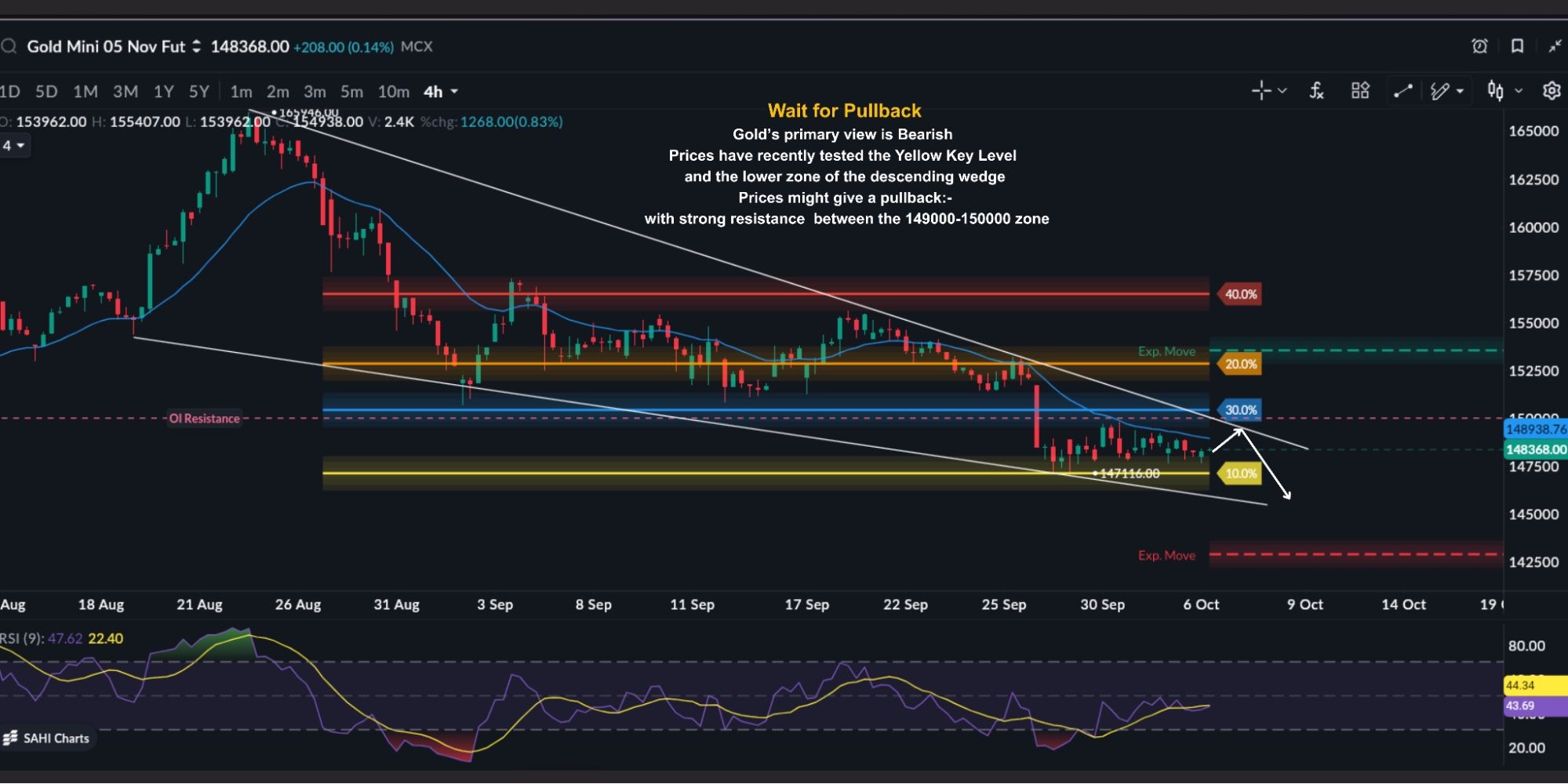
That was the analysis. Now we need to decide what the actual trade would look like if the setup develops.
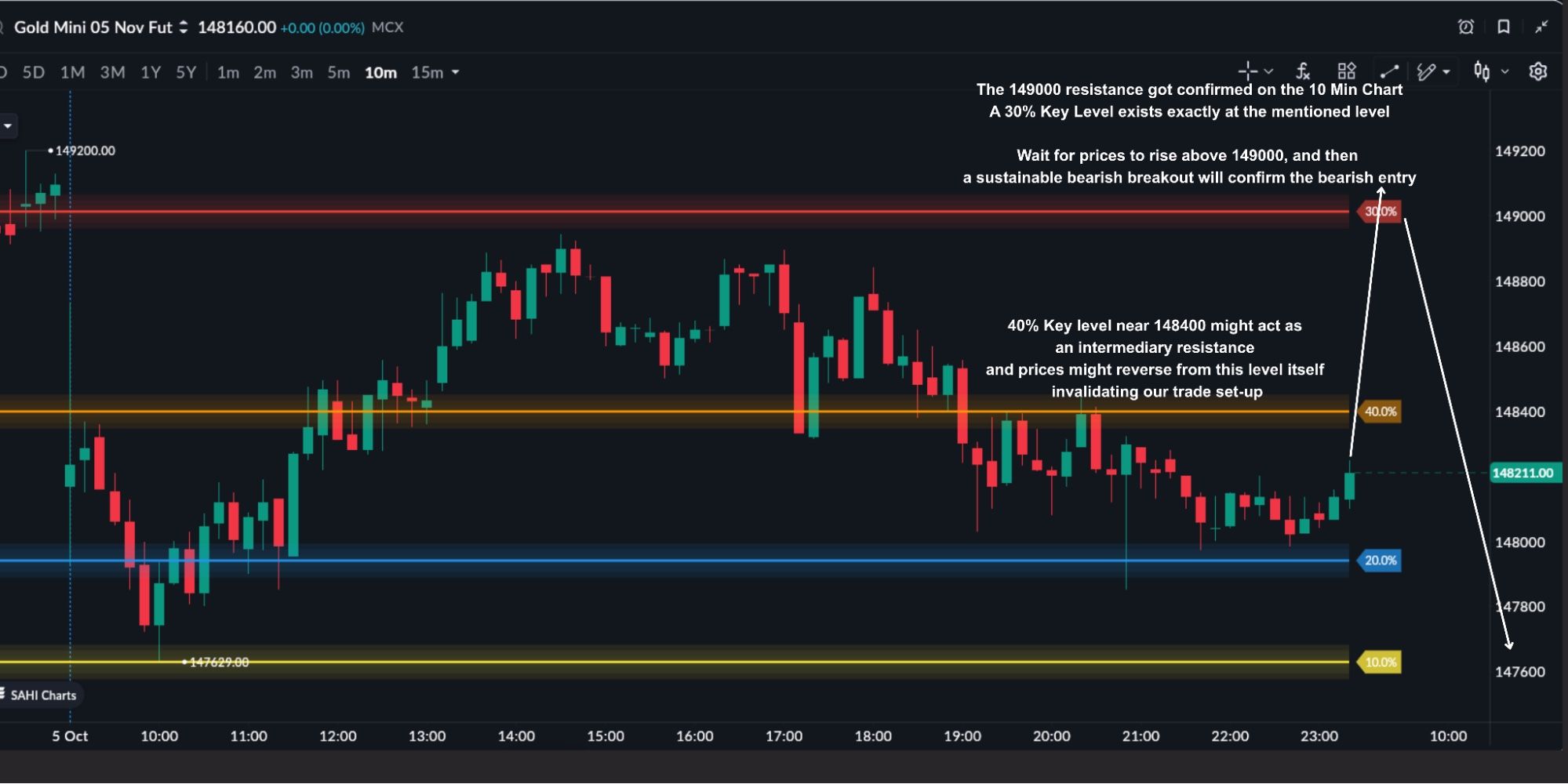
Gold Mini is trading around ₹1,48,000. Rather than selling immediately, we will wait for price to pull back towards the ₹1,49,000–₹1,49,350 area and look for signs of bearish rejection on the 10-minute chart.
If that rejection appears, we have a possible entry. If Gold continues higher through the resistance area, the setup does not qualify.
For this example, assume the trader is willing to lose a maximum of ₹15,000. We can now structure the bearish Gold view through either Gold Mini Futures or a Gold Put.
Fix The Trade Levels
Before choosing quantity or calculating capital, put the market levels on paper.
Entry: ₹1,49,000, if price pulls back and shows bearish rejection
Stop-loss: ₹1,50,200
Target: ₹1,47,000
From ₹1,49,000 to the stop at ₹1,50,200, the distance is 1,200 points. The target at ₹1,47,000 is 2,000 points away, giving the setup a potential reward-to-risk ratio of approximately 1.67:1 before charges and slippage.
Structuring The Futures Trade
A bearish Gold view can be expressed by selling Gold Mini Futures. For this historical example, we will use the Gold Mini 05 Nov Futures contract shown on the chart.
In this example, one Gold Mini lot represents 100 grams, while the quoted price is per 10 grams. That means a one-point move in the quoted price changes the value of one lot by ₹10.
With the stop 1,200 points away:
1,200 × ₹10 = ₹12,000
So one lot carries an illustrative planned loss of approximately ₹12,000 if the position can be exited around the intended stop.
That fits within the ₹15,000 risk limit.
Two lots would take the same stop-based risk to roughly ₹24,000, so the position stays at one lot.
The Futures structure is therefore:
Instrument: Gold Mini 05 Nov Futures
Direction: Sell
Quantity: 1 lot
Entry: ₹1,49,000
Stop-loss: ₹1,50,200
Target: ₹1,47,000
Planned stop-based loss: Approximately ₹12,000
Maximum acceptable loss: ₹15,000
The stop comes from the market setup. Quantity is then fitted around that stop and the trader’s risk limit.

If one lot itself creates too much risk, a suitable smaller contract variant may be considered. If no available contract fits the risk budget, the trade has to be skipped.
Check The Futures Capital Requirement
At ₹1,49,000, one Gold Mini lot represents approximately:
₹1,49,000 × 10 = ₹14,90,000
in contract value.
Using an illustrative margin assumption of 9%, the estimated margin requirement would be:
₹14,90,000 × 9% = ₹1,34,100
The actual margin should be checked on SAHI because the live requirement will depend on the applicable exchange and broker rules at that time.
So the Futures structure gives us three separate numbers:
Contract exposure: approximately ₹14.90 lakh
Illustrative margin: approximately ₹1.34 lakh
Planned stop-based loss: approximately ₹12,000
The ₹12,000 remains an estimate based on execution around the planned stop. A gap or worse execution can increase the actual loss.
Structuring The Put Option
The bearish Gold view can also be expressed by buying a Put.
The underlying setup remains tied to the Gold Mini chart. We are still working with the ₹1,49,000 area, the ₹1,50,200 invalidation level and the bearish scenario below.
The Option adds another set of choices: expiry, strike and premium.
An expiry needs to leave enough time for the expected Gold move to develop. Commodity Options can also expire before the Futures contract they reference, so the actual Option expiry needs to be checked rather than inferred from the Futures contract.
Then comes the strike.
Choosing The Put Strike
Consider four illustrative Put strikes for the same Gold view.
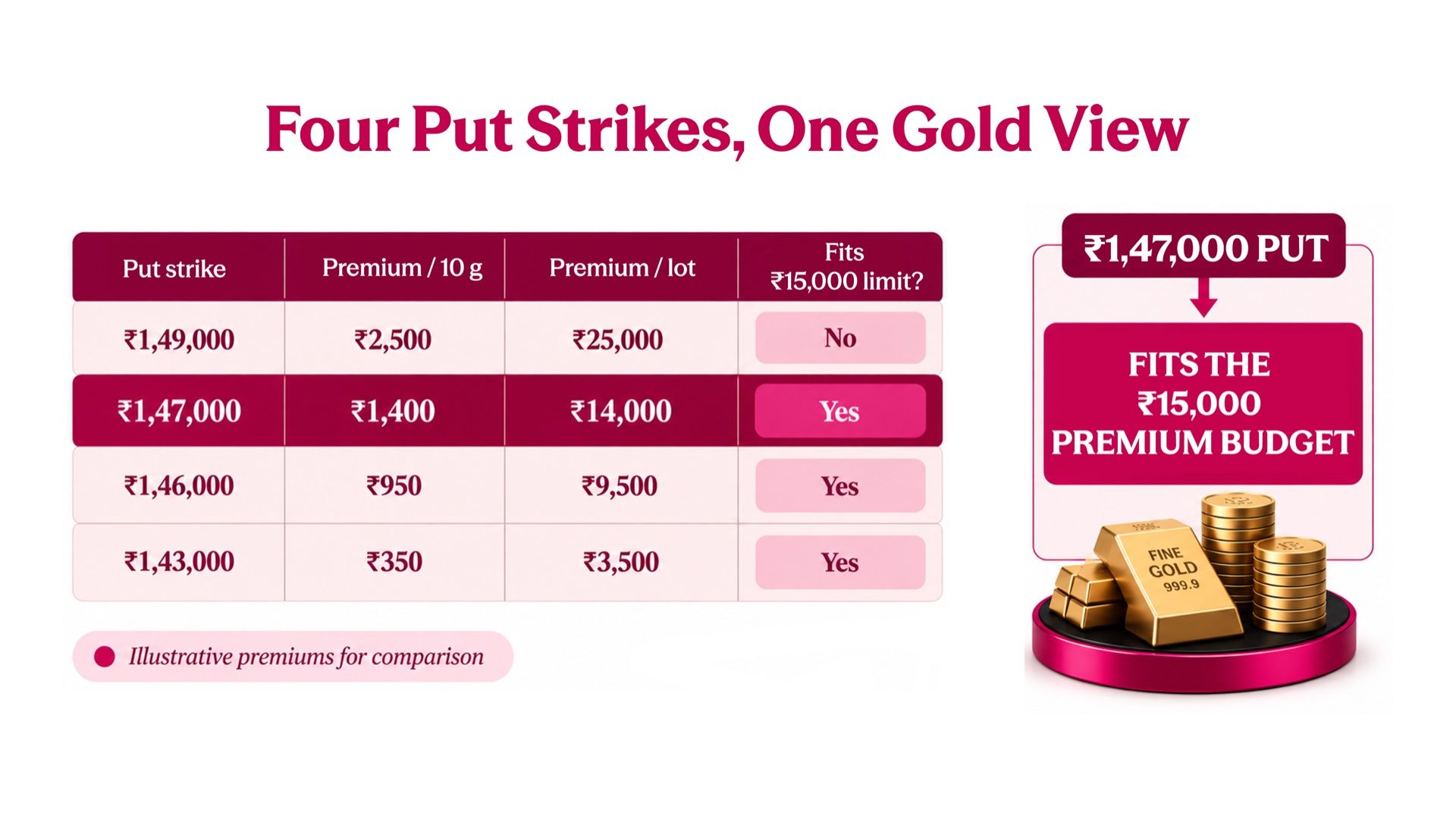
The ₹1,49,000 Put requires a premium outlay of ₹25,000, which exceeds our ₹15,000 risk limit.
The ₹1,46,000 and ₹1,43,000 Puts require less premium, but their strikes sit farther below the current Gold price.
For this example, we will use the ₹1,47,000 Put. Its premium fits within the ₹15,000 limit while keeping the strike closer to the current market than the cheaper alternatives.
Its premium is ₹1,400 per 10 grams. Since one lot represents 100 grams:
₹1,400 × 10 = ₹14,000
At expiry, the break-even becomes:
₹1,47,000 − ₹1,400 = ₹1,45,600
That is the break-even at expiry. Before then, the Option premium can also respond to the Gold move, volatility and the time remaining.
Quantity And Maximum Loss
One lot requires a premium outlay of ₹14,000.
That fits within the ₹15,000 limit. Two lots would require ₹28,000, so the position stays at one lot.
The Put structure is:
Instrument: Gold Mini Put
Direction: Buy Put
Strike: ₹1,47,000
Quantity: 1 lot
Premium: ₹1,400 per 10 g
Premium outlay: ₹14,000
Expiry break-even: ₹1,45,600
Premium at risk: ₹14,000, excluding charges
For a standalone long Put, the premium paid is the amount at risk while the position remains a long Option. Commodity-option expiry needs extra care because an in-the-money Option carried into expiry may create Futures or settlement obligations under the applicable rules. The expiry, broker cut-off and settlement treatment should therefore be checked before holding the position that far.
Plan The Put Exit
The Option needs an exit framework as well.
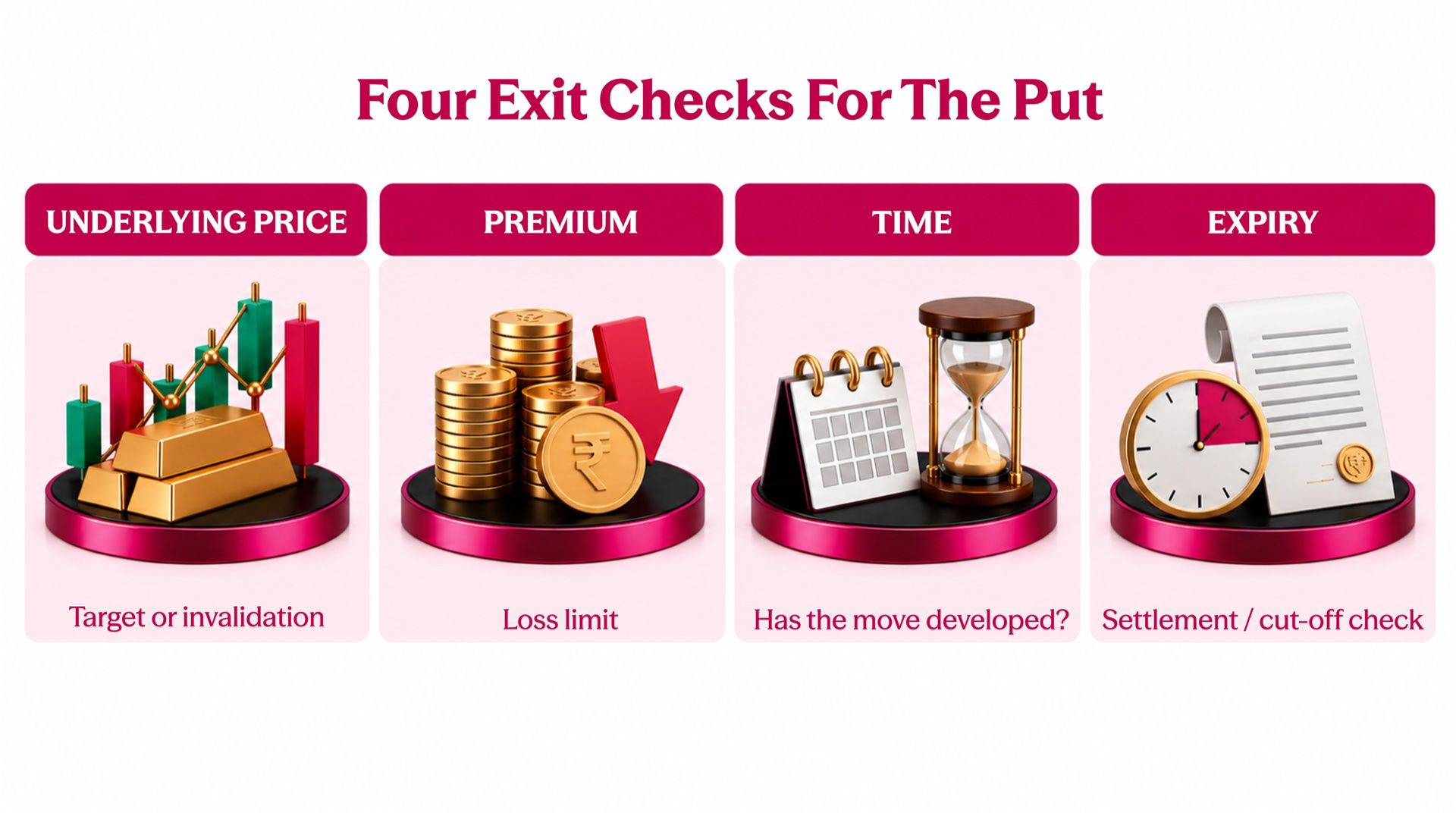
There are four things to monitor.
Underlying price: Has Gold reached the target area or crossed the level that weakens the bearish view?
Premium: Has the Option premium fallen enough for the position to be closed?
Time: Has the expected move failed to develop within the intended holding period?
Expiry: Is the contract approaching the point where settlement and broker cut-offs need attention?
SAHI squares off deliverable commodity contracts automatically before the tender period begins, so the practical exit deadline comes earlier than the contract’s expiry date.
A bearish view can still take too long to play out for a particular Put. Time therefore becomes part of the Option trade alongside price.
Same View, Two Trade Structures
We can now put the two plans next to each other.
Both plans are built from the bearish Gold view established in Chapter 15.
The Futures position creates direct exposure to Gold Mini and requires margin. The Put brings strike, premium, expiry and time into the trade.
Once these decisions are made, the trade is ready to move to the order screen.
Chapter 17 takes it there.
The sizing and stop principles used here come from Risk & Behaviour Before You Trade Commodities.
Key Takeaways
- Use the underlying market view to define the entry, invalidation and target for the trade.
- In Futures, use the stop distance and acceptable loss to determine how much quantity fits.
- Contract exposure, Futures margin and planned loss are different numbers.
- A Put strike should be judged against the expected market move, premium outlay, break-even and risk budget.
- Decide the instrument, quantity, capital requirement and exit framework before placing the order.
Test yourself
Five quick questions on Chapter 16: Structuring a Futures or Options Trade
Commodity knowledge check
How well do you understand commodity markets?
Answer all five questions to check what you have picked up from this chapter. Each answer comes with a short explanation.
 5 questionsUnder 3 minutes
 Instant score