
Auto Stocks Crash Despite Strong August Sales: Why Is Nifty Auto Falling?

Nifty Auto fell 3.25% on September 2, 2026, as Brent crude jumped past $95 a barrel on rising US-Iran tensions, raising fears of higher input costs and fuel inflation. Hero MotoCorp, Eicher Motors, Bosch and Sona BLW Precision Forgings led the fall. The drop came despite a strong August: Tata Motors' car and truck sales grew 56% and 49% year-on-year, Ashok Leyland rose 38%, and two-wheeler makers TVS Motor and Royal Enfield posted double-digit growth.
Strong August sales should have been good news for auto stocks. Instead, the sector faced heavy selling on Wednesday, September 2, 2026.
The Nifty Auto index fell 3.25% in afternoon trade. Hero MotoCorp, Eicher Motors, Bosch and Sona BLW Precision Forgings were among the biggest losers.
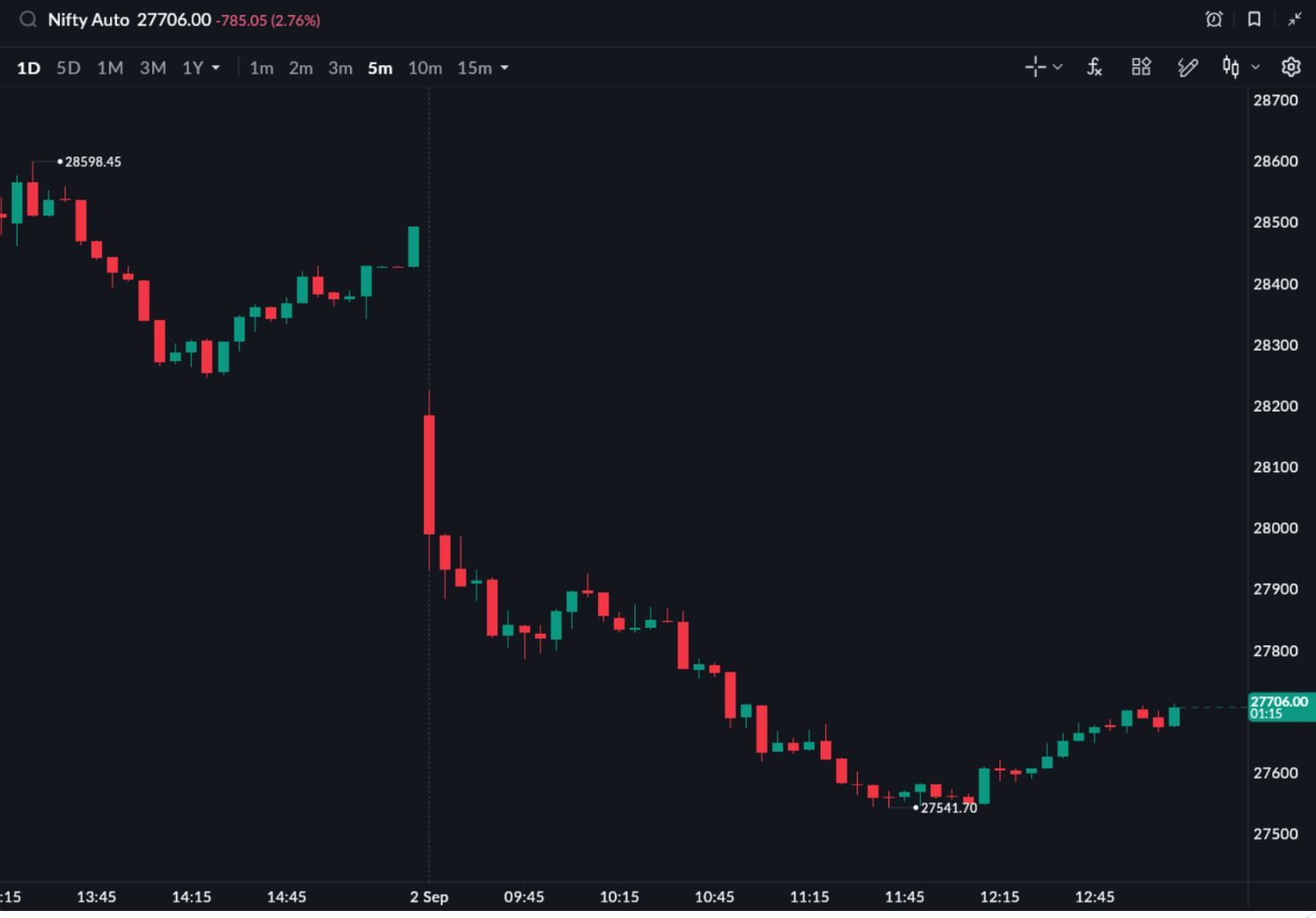
(As of 1:15 PM on September 2, 2026)
Here is the twist: carmakers had just posted strong August sales across cars, two-wheelers and trucks. So what was pulling auto stocks down?
Crude Oil Prices Put Auto Stocks Under Pressure
The immediate trigger was a sharp rise in crude oil prices. US and Iran tensions flared up again, with both sides trading strikes in the Middle East for the first time in weeks.
Brent crude climbed past $95 a barrel in early trade, while WTI moved above $90. Costlier crude raises fuel and input costs for carmakers. It can also cool demand for new vehicles. A broader risk-off mood in Indian markets added to the pressure.
That is why strong sales alone could not keep auto stocks in the green. Read more on why US-Iran tensions tend to push up India's crude and energy costs.
Nifty Auto Falls Over 3%, Hero MotoCorp Among Biggest Losers
The selling hit all 15 stocks in the Nifty Auto index.
| Stock | Change |
|---|---|
| Hero MotoCorp | -6.78% |
| Eicher Motors | -4.55% |
| Bosch | -4.35% |
| Sona BLW Precision Forgings | -3.88% |
| Bajaj Auto | -3.24% |
| Mahindra & Mahindra | -2.99% |
| TVS Motor Company | -2.49% |
| Ashok Leyland | -2.48% |
| Maruti Suzuki | -1.95% |
| Tata Motors Passenger Vehicles | -0.81% |
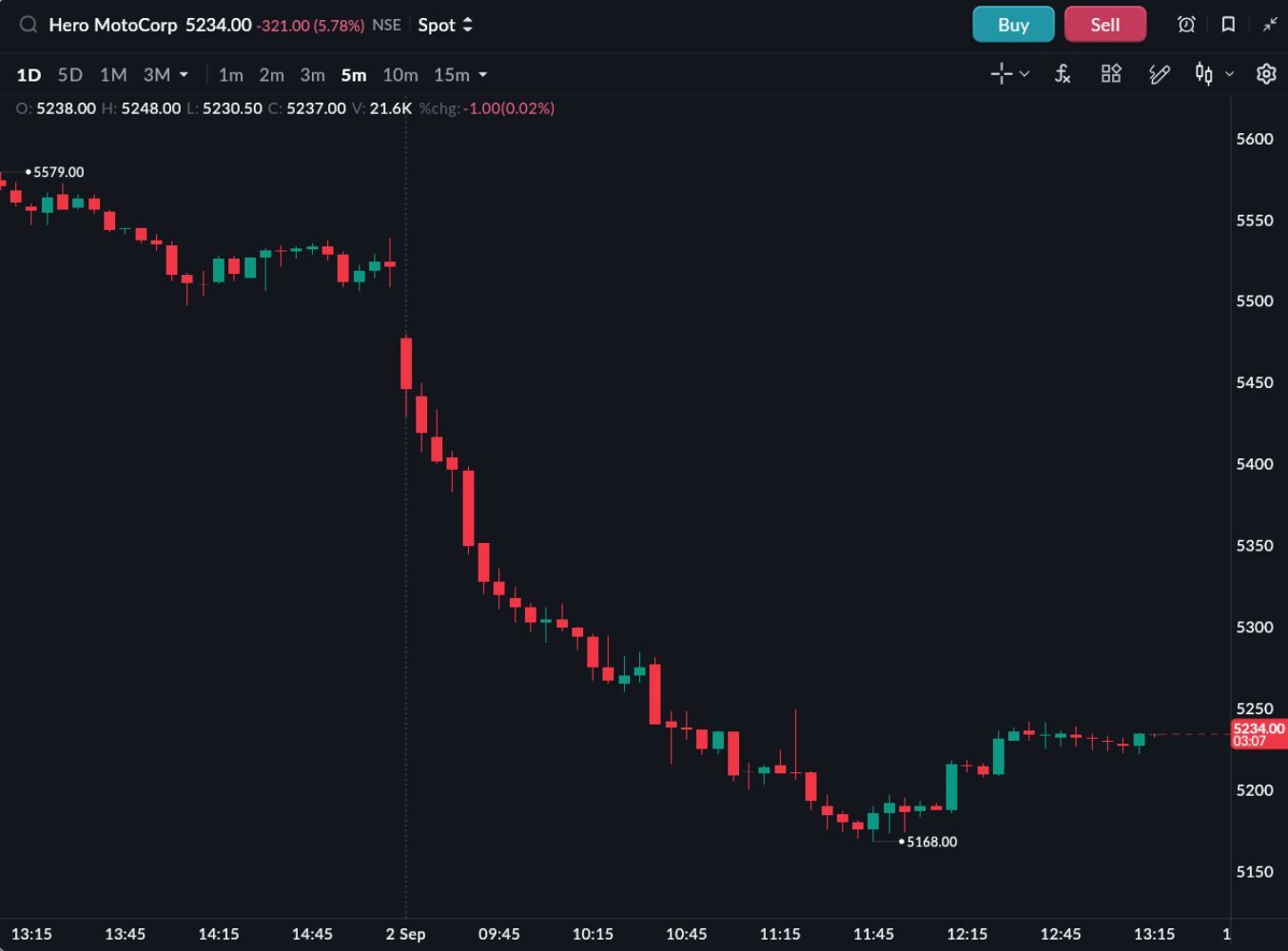
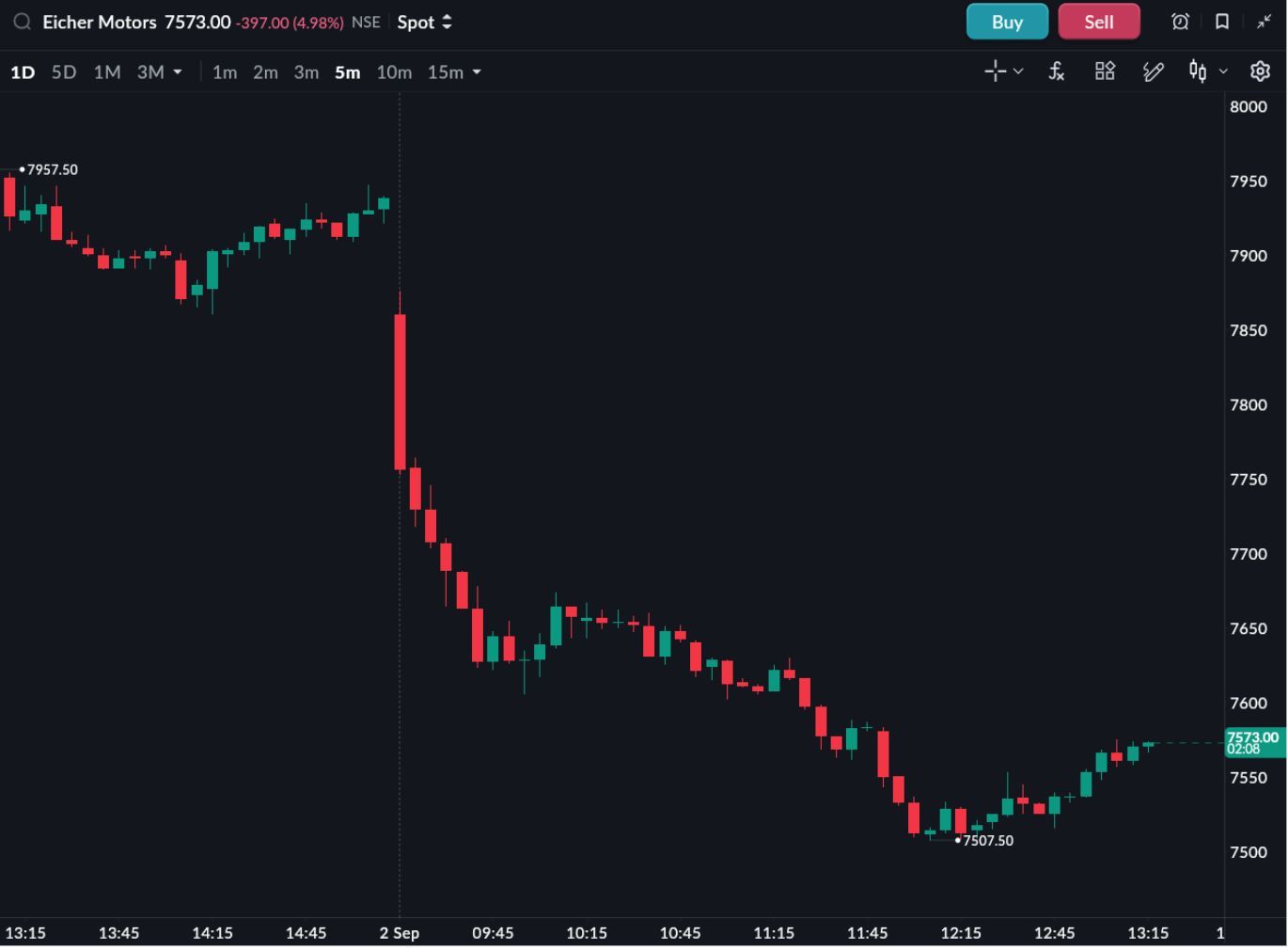
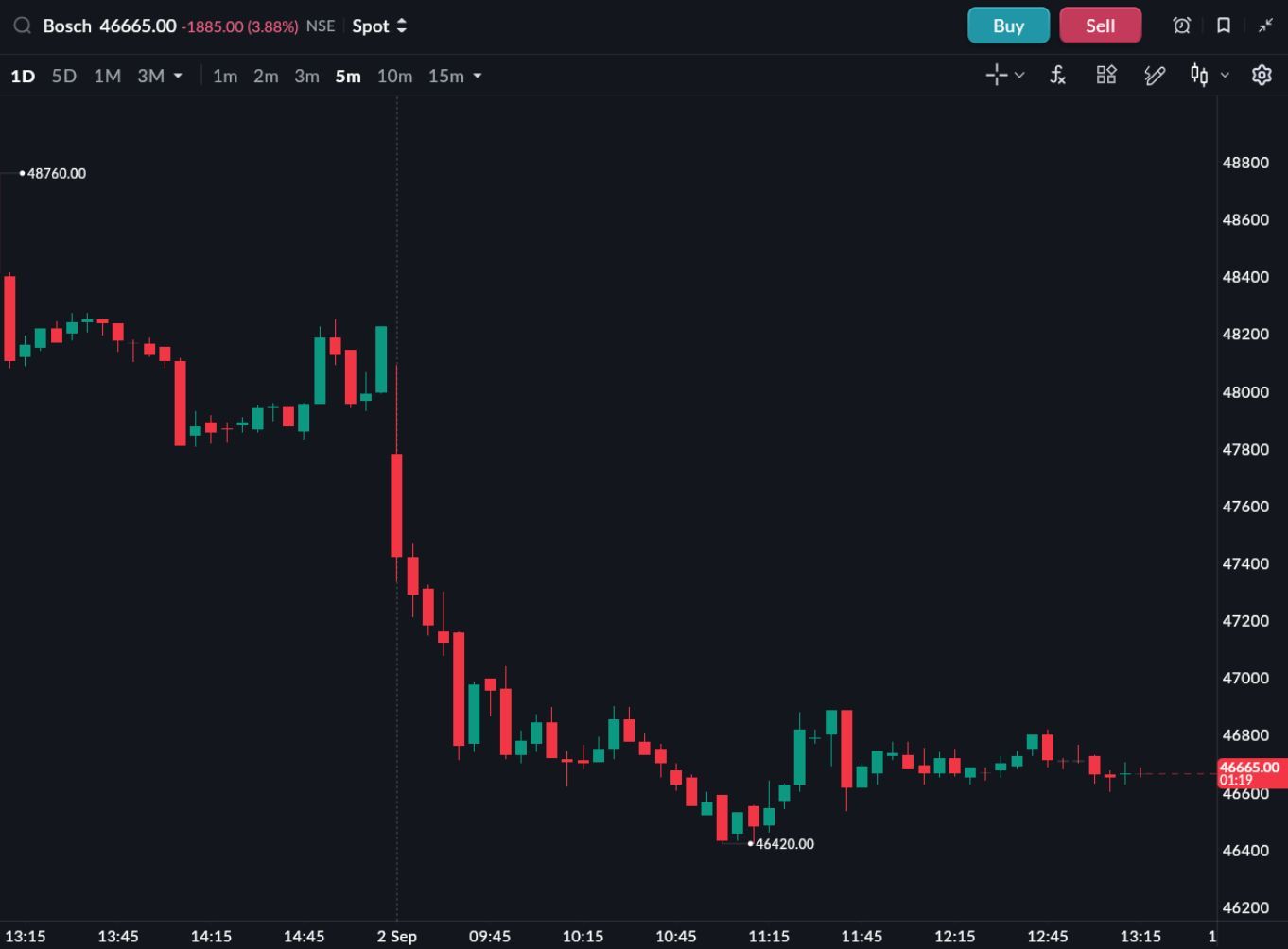
(As of 1:17 PM on September 2, 2026)
Earlier in the day, the Nifty Auto index was down 2.24% at 27,853.55. The Nifty 50 was down 0.70%, and the Sensex had fallen 451 points. The fall was broad, not limited to one stock.
But August Auto Sales Were Actually Strong
Here is the interesting part: the sell-off came despite a strong August.
Tata Motors' passenger vehicle sales grew 56% year-on-year, to 67,753 units. Mahindra & Mahindra's utility vehicle sales rose 50%, to 59,257 units. Maruti Suzuki grew 21%, to about 2.19 lakh units. Hyundai Motor India's total sales rose 9%, to roughly 65,800 units.
Two-wheelers told a similar story. TVS Motor grew 21%, to 6.17 lakh units. Royal Enfield rose 11%, to 1.26 lakh units. Hero MotoCorp, the day's biggest stock loser, grew just 3%.
For the full company-by-company breakdown, see SAHI's August 2026 auto sales roundup.
What was the main trigger behind the Nifty Auto index's fall on September 2, 2026?
Trucks and Buses Lead August's Sales Growth
Trucks and buses posted some of the sharpest growth in August. Tata Motors' truck business grew 49% year-on-year, to 44,411 units. Ashok Leyland rose 38%, to 21,038 units. VE Commercial Vehicles, Eicher Motors' truck arm, grew 17.7%, to 8,434 units. Combined, the three listed truck makers grew about 40%.
Bajaj Auto, which sells two- and three-wheelers, posted a 28% jump in total August sales, to 5.35 lakh units.
Why Aren't Strong Sales Supporting Auto Stocks?
The answer may lie less in August itself and more in what comes next.
Part of the growth looks better than it really is. August 2025 was a weak base, because buyers had delayed purchases ahead of GST tax cuts. Against that soft base, even normal demand can look big on paper.
Some of it is also wholesale supply to dealers, not confirmed retail demand. FADA's Vahan data shows retail sign-ups grew a smaller 16% in August, to about 24 lakh units. Growth may slow later in FY27 as the base gets tougher. That said, the festive season, the busiest time of year for car and bike sales, is just starting.
So the sell-off is less a verdict on August demand. It looks more like the market weighing strong dispatch data against costlier crude, a tougher base ahead, and a broader risk-off mood.
The Bigger Picture for Auto Stocks
Wednesday's fall is a reminder: strong sales and strong stock prices do not always move together.
August showed healthy demand across cars, two-wheelers and trucks. But a sudden jump in crude oil prices, driven by war fears rather than demand, was enough to override that. For now, the business numbers stay strong even as short-term sentiment in auto stocks stays cautious. That gap is worth watching as the festive season nears.
Sources: NSE Nifty Auto Index data; company sales releases from Tata Motors, Ashok Leyland, Eicher Motors/VECV, Maruti Suzuki, Mahindra & Mahindra, Bajaj Auto, TVS Motor, Hero MotoCorp and Hyundai Motor India; FADA Vahan retail registration data.
Frequently Asked Questions (FAQs)
All topics
Click the link, confirm the box next to sahi.com is checked — ignore any other results.