
Why Adani stocks are rising?

Adani stocks like Adani Green, Adani Enterprises, and others saw gains of over 10% and are seeing a sharp rebound after weeks of weakness, driven by a shift in global trade and policy signals rather than company-specific announcements. The rally reflects changes in geopolitical risk, trade conditions, and investor sentiment that directly affect large Indian infrastructure and energy groups.

The move surprised markets because it came during a volatile session for broader indices. The key driver lies outside quarterly results or earnings updates and is linked instead to developments at the India–US policy level.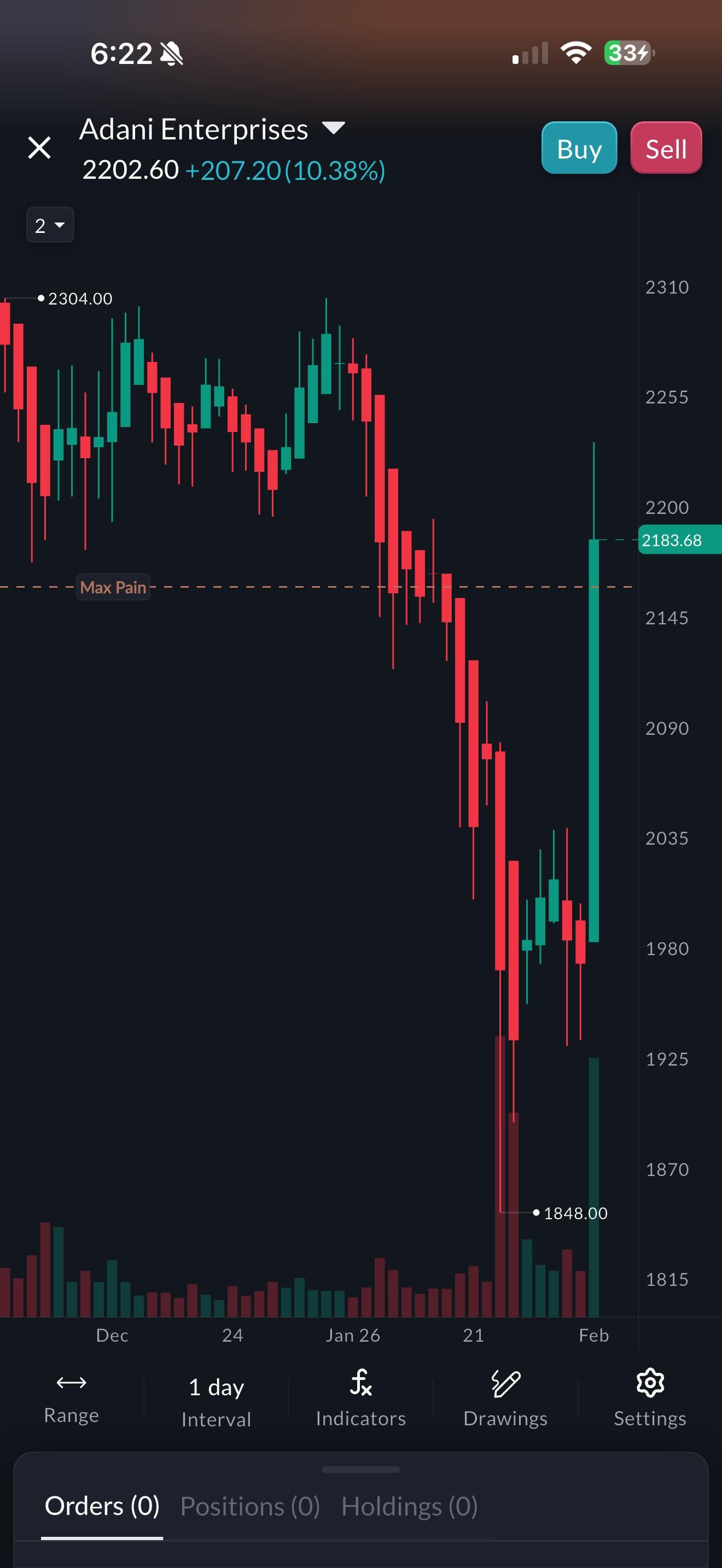
The India–US trade deal impact on markets
A major trigger behind the rise in Adani stocks today is a newly announced bilateral trade agreement between India and the United States. The deal followed high-level talks between leaders of both countries and introduced changes that markets quickly priced in.
Key elements of the trade agreement
- US tariffs on certain Indian-linked exports were reduced from levels as high as 50% to around 18%
- India agreed to stop purchasing Russian oil, easing geopolitical friction tied to the Ukraine conflict
These changes lowered uncertainty around trade flows, sanctions risk, and diplomatic alignment. For equity markets, such clarity often matters more than short-term earnings data.
The reduction in tariff pressure and geopolitical tension removed a layer of risk that had weighed on Indian companies with global exposure, especially in infrastructure, logistics, and energy.
Why Adani Group is directly affected
Adani Group operates across sectors that are sensitive to international trade conditions and cross-border capital flows. Its businesses span ports, power generation, renewable energy, transmission, logistics, and large infrastructure projects.
Exposure to global policy and capital
The trade deal matters to Adani for several structural reasons:
- Infrastructure-linked exports benefit from lower trade friction
- Overseas partnerships face less policy uncertainty
- Foreign lenders and investors see reduced geopolitical risk
- Long-gestation projects gain visibility in funding and execution
Because Adani companies rely on large-scale financing and international engagement, even modest improvements in policy alignment can have an outsized effect on investor perception.
Brokerage commentary reflected this quickly. Market notes highlighted Adani Group as a likely beneficiary of trade relief, which helped explain why the rally was supported by strong trading volumes rather than low-liquidity spikes.
Stock action: A sharp reversal in Adani share price rally
The Adani share price rally unfolded rapidly during the session.
Intraday movement highlights
- Adani Enterprises rose over 11% intraday, touching around ₹2,224
- Adani Green Energy led gains within the group
- Several stocks reversed recent monthly declines of about 12%
This pattern suggests a sentiment-driven reversal rather than gradual accumulation. The buying came despite volatility in broader indices, indicating theme-based positioning rather than index-led movement.
The rally also stood out because it followed a period of sustained pressure, making the move more notable from a market psychology perspective.
Infrastructure stocks India: A broader sector context
The move in Adani stocks today fits into a wider reassessment of infrastructure stocks India amid improving policy clarity.
Large infrastructure companies are closely tied to:
- Government spending priorities
- Trade relationships
- Access to long-term capital
Any signal that reduces external risk can quickly alter valuation assumptions for such businesses. The trade agreement acted as one such signal, especially for groups with international exposure.
Renewable energy sector India and budget alignment
The rally did not occur in isolation from domestic policy developments. The Union Budget 2026 had already reinforced government support for sectors central to Adani’s portfolio.
Budget-linked policy support areas
- Renewable energy capacity expansion
- Green transition financing frameworks
- Power transmission and infrastructure development
Within the renewable energy sector India, Adani Green Energy had shown relative resilience even before the trade announcement. Post-budget developments, including power purchase agreements and execution updates, had supported sentiment.
The trade deal added a global layer of confidence on top of an already supportive domestic policy environment.
Addressing recent overhangs and concerns
Before the rally, Adani stocks had faced pressure due to a mix of global risk-off sentiment and concerns related to regulatory scrutiny in the United States.
These issues did not disappear overnight. However, markets often respond to changes in direction rather than complete resolution of risks.
How sentiment shifted
- The narrative moved from rising geopolitical risk to de-escalation
- Policy engagement replaced uncertainty
- Probability-weighted outcomes improved
This shift was sufficient to attract capital that had stayed on the sidelines, particularly in large-cap stocks that had seen meaningful corrections.
The bigger picture behind why Adani stocks are rising
Understanding why Adani stocks are rising today requires looking beyond daily price moves. The rally signals a broader reset in market perception.
Key sentiment changes
- Global risk perception around Indian conglomerates improved
- India–US policy alignment became clearer
- Infrastructure and clean energy themes regained credibility
The move reflects how quickly macro and policy factors can influence capital flows into sectors tied to long-term development.
Comparison: Drivers behind the rally
| Factor | Earlier Market View | Current Shift |
|---|---|---|
| Geopolitical risk | Elevated uncertainty | Reduced tension |
| Trade environment | Tariff-heavy | Lower tariff burden |
| Capital sentiment | Risk-averse | Selective re-entry |
| Sector outlook | Cautious | Stabilising |