
Petrol And Diesel Prices Increased By ₹3/Litre: Why IOCL, BPCL, HPCL Shares Fell
Fuel prices were raised for the first time in four years, but OMC stocks declined as analysts believe the increase may not fully offset losses caused by elevated crude oil prices.

Quick Summary
State-run oil marketing companies (OMCs), including Indian Oil Corporation, Bharat Petroleum Corporation Limited and Hindustan Petroleum Corporation, remained in focus after the government raised petrol and diesel prices by ₹3 per litre for the first time in four years. However, OMC stocks declined as the hike fell short of market expectations amid elevated crude oil prices.
On 15 May, India announced a ₹ 3-per-litre increase in petrol and diesel prices across the country. The move comes due to sharp volatility in global crude oil prices due to rising geopolitical tensions in West Asia and disruptions around Strait of Hormuz.
Despite the fuel price hike, shares of state-run oil marketing companies (OMCs) saw selling pressure during Friday’s trade as investors remained concerned over the continued pressure on marketing margins.
OMC Stocks Under Pressure
Shares of major OMCs declined in intraday trade on Friday:
|
Company |
Stock Price |
|---|---|
|
Hindustan Petroleum Corporation |
₹365.60 (-3.17%) |
|
Bharat Petroleum Corporation |
₹285.40 (-3.25%) |
|
Indian Oil Corporation |
₹137.25 (-2.14%) |
As of 15 May, 11 AM
Read how rising inflation and higher fuel costs led to the ₹2 milk price hike in India in 2026
New Petrol And Diesel Prices In Major Cities
Following the revision, fuel prices increased across metro cities:
|
City |
Petrol Price |
Diesel Price |
|---|---|---|
|
Delhi |
₹97.77/litre |
₹90.67/litre |
|
Mumbai |
₹106.64/litre |
₹93.14/litre |
|
Kolkata |
₹108.74/litre |
₹95.13/litre |
|
Chennai |
₹103.67/litre |
₹95.25/litre |
Why Were Fuel Prices Increased?
Latest ₹3 per litre increase is expected to provide partial relief to OMCs, which have reportedly been absorbing heavy losses due to elevated crude prices.
Earlier this week, Petroleum Minister Hardeep Singh Puri stated that oil companies were losing nearly ₹1,000 crore per day due to high crude prices, with quarterly losses around ₹1 lakh crore because retail fuel prices had remained frozen despite the rise in crude oil prices.
Market estimates suggest that the current hike may help OMCs recover nearly ₹125 crore per day. However, analysts believe this is still below the estimated daily losses.
Media reports indicate that to recover costs and normalize marketing margins fully, OMCs may still need, around ₹28 per litre additional increase in petrol prices, and around ₹32 per litre additional increase in diesel prices
CNG Prices Also Increased In Delhi And Mumbai
The increase in petrol and diesel prices was followed by a rise in CNG rates in both Delhi and Mumbai Metropolitan Region (MMR).
Indraprastha Gas Ltd (IGL) on Friday raised CNG prices in Delhi by ₹2 per kg, just a day after a similar hike was announced in Mumbai and nearby areas. The move comes as global energy markets remain under pressure due to the ongoing Iran conflict and rising crude oil prices.
In the Mumbai Metropolitan Region, Mahanagar Gas Limited (MGL) increased CNG prices by ₹2 per kg, taking the retail price to ₹84 per kg with immediate effect. The hike is expected to increase transportation costs for commuters, auto-rickshaw drivers and commercial vehicle operators.
Revised CNG Prices – Delhi & Mumbai (as of 15 May 2026)
Following the revision, here are the updated CNG prices in Delhi and Mumbai:
|
Region |
New Price |
Previous Price |
Change |
|---|---|---|---|
|
Delhi |
₹79.09/kg |
₹77.09/kg |
+ ₹2/kg |
|
Mumbai Metropolitan Region |
₹84/kg |
₹82/kg |
+ ₹2/kg |
Source: Indraprastha Gas Limited (IGL)
Following the revision, as of 15 May, 12.50 AM, shares of gas distribution companies also came under pressure.
Indraprastha Gas (IGL): ₹151.93, down 2.39%
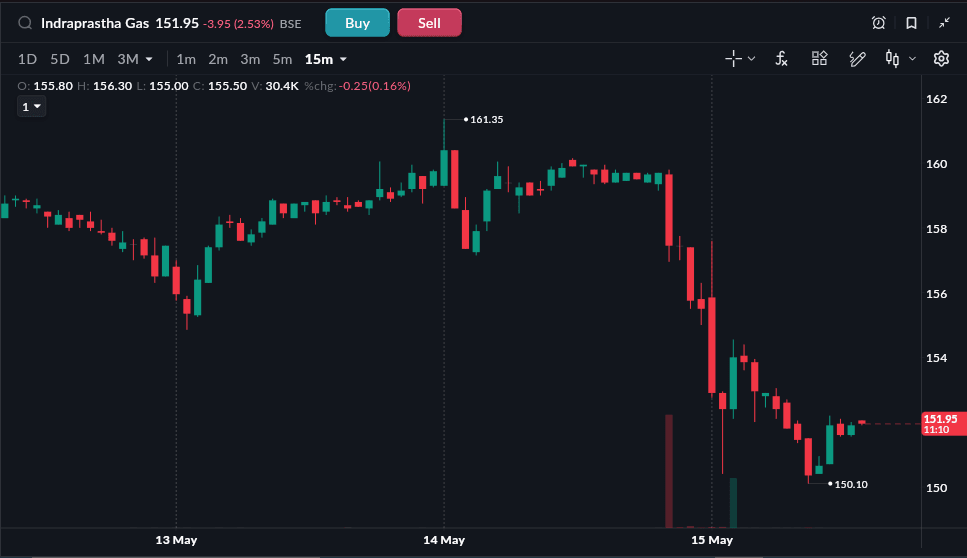
As of 15 May, 12.50 PM
Mahanagar Gas (MGL): ₹1,088.80, up 1.82%
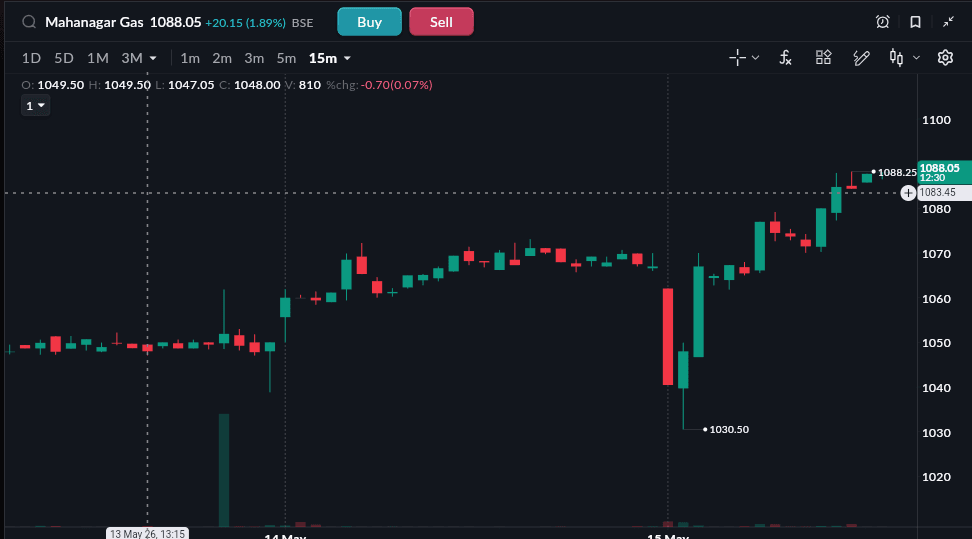
As of 15 May, 12.50 PM
Read why gold and silver prices surged sharply after the latest duty hike announcement
Sectors Likely To Be Impacted By Rising Fuel Prices
Higher fuel prices are expected to increase inflationary pressure across sectors.
-
FMCG and food products
-
Vegetables, fruits and dairy
-
Logistics and transportation
-
Aviation and tourism
-
Cab aggregators like Uber and Ola
-
Quick commerce and delivery platforms
-
Agriculture and rural economy
The aviation industry is already facing pressure from high aviation turbine fuel (ATF) prices, while logistics firms and transport operators may gradually pass on higher costs to consumers.
In rural India, higher diesel prices may raise farming costs as tractors, irrigation pumps and transportation systems heavily depend on diesel.
Fuel Price Hike Expected To Boost EV Demand
The recent increase in petrol, diesel and CNG prices is also expected to boost demand for electric vehicles (EVs) across India, as consumers look for more affordable transportation options amid rising fuel costs.
Electric vehicle manufacturers have already started increasing production to meet growing demand following the sharp rise in fuel prices linked to the ongoing West Asia crisis.
What Are Industry Saying About EV Demand?
-
According to Tata Motors Passenger Vehicles Managing Director and CEO Shailesh Chandra, the company has seen a 25–30% jump in EV bookings following the recent geopolitical tensions in West Asia. He also stated that the company plans to increase production by around 10% from May to meet higher demand, although supplier capacity remains a key factor.
-
Two-wheeler EV makers are also seeing strong growth in demand. Earlier this month, Bajaj Auto Executive Director Rakesh Sharma said consumer preference is shifting towards electric scooters due to rising fuel prices.
-
According to Sharma, the electric two-wheeler segment grew nearly 40% in Q4 and continued to grow at more than 60% in April, higher than the growth seen in petrol-powered scooters.
-
Companies such as Bajaj Auto and Hero MotoCorp are reportedly increasing EV production to cater to the rising demand.
-
Mahindra & Mahindra Executive Director and CEO Rajesh Jejurikar also stated during an analysts’ call that higher fuel prices could provide a stronger-than-expected boost to EV sales in the coming months.
Commercial Vehicle Segment Could See Bigger Shift
Industry analysts believe the biggest impact of rising fuel prices may be seen in the commercial vehicle and three-wheeler segments, where operating costs directly affect driver earnings.
In the electric three-wheeler market, EV penetration has already crossed 50%. With CNG prices also increased by ₹2 per kg, adoption of electric auto-rickshaws and commercial vehicles is expected to rise further.
Industry executives noted that demand for electric three-wheelers has remained strong in recent weeks, while demand for petrol and CNG-powered three-wheelers has slowed down.
Conclusion: Why Crude Oil Prices Are Rising
Global crude oil prices have surged due to escalating geopolitical tensions in West Asia and concerns around disruptions in Strait of Hormuz, one of the world’s most critical oil transit routes.
Recent attacks on commercial vessels near Oman and concerns over shipping disruptions have further intensified fears around global energy supply chains.
The Indian government has already begun taking steps to reduce the economic impact of rising fuel prices, including fuel-saving measures and stricter import rules for some commodities.