
After Maharashtra Cuts ATF VAT From 18% To 7%, Delhi Also Reduces ATF VAT From 25% To 7%
Delhi joins Maharashtra in reducing Aviation Turbine Fuel VAT to 7% as airlines face pressure from rising global jet fuel prices and West Asia disruptions.

Quick Summary
Maharashtra government has reduced VAT on Aviation Turbine Fuel (ATF) from 18% to 7% for six months starting 15 May 2026. The Delhi government has also announced a reduction in ATF VAT from 25% to 7%. The tax cuts are expected to provide relief to airlines such as IndiGo and Air India, which are facing pressure from rising global jet fuel prices and disruptions linked to the West Asia crisis.
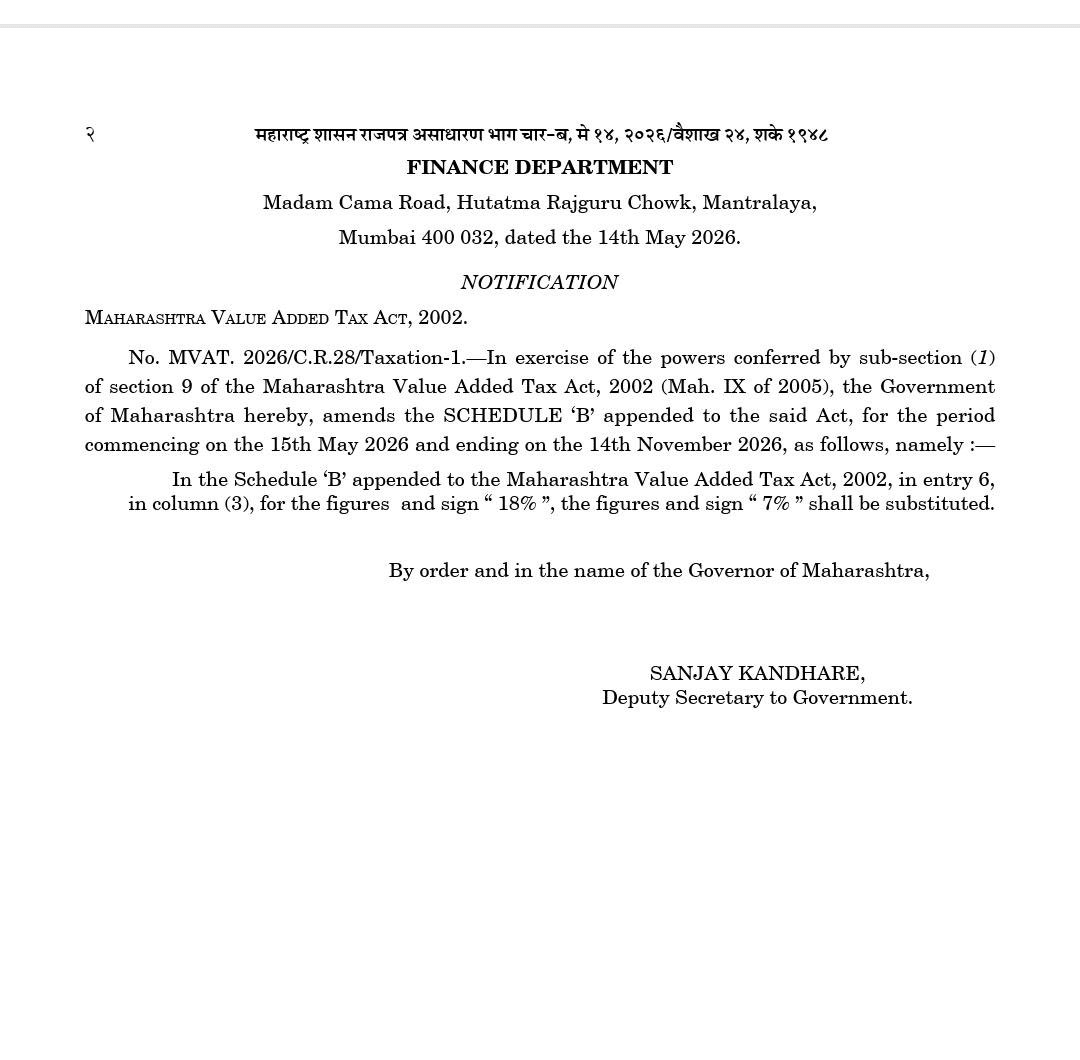
Maharashtra government has announced a reduction in Value Added Tax (VAT) on Aviation Turbine Fuel (ATF), lowering the tax rate from 18% to 7% to provide relief to the aviation sector amid rising fuel prices.
According to a notification issued by Maharashtra Finance Department, revised VAT rate came into effect on 15 May 2026, and will remain applicable till 14 November 2026.
The move comes at a time when airlines are struggling with rising operational expenses due to higher crude oil and jet fuel prices triggered by the ongoing geopolitical tensions in West Asia.
India Inflation and Milk Price Hike: What Consumers Should Know
Why Maharashtra Reduced VAT on ATF
Fuel remains one of the biggest expenses for airlines, accounting for nearly 30–40% of total operating costs, according to ICRA.
Over the past few months, global aviation fuel prices have increased sharply due to supply disruptions and airspace restrictions linked to Middle East crisis.
According to industry data, global jet fuel prices surged to nearly $162.89 per barrel for the week ended 8 May, compared to around $99.40 per barrel at the end of February.
The sharp rise in fuel prices has increased pressure on airline profitability and raised concerns over higher airfares and possible flight reductions.
Ministry of Civil Aviation had earlier held discussions with several states, including Maharashtra, Delhi, Tamil Nadu and West Bengal, requesting them to reduce VAT on ATF to support the aviation industry during the ongoing crisis. Following Maharashtra’s decision, the Government of Delhi has also reduced VAT on Aviation Turbine Fuel from 25% to 7%, according to officials. The decision was approved during a Cabinet meeting chaired by Delhi Chief Minister Rekha Gupta. Officials stated that the move is expected to benefit airlines and passengers by helping reduce operational cost pressures amid rising global fuel prices.
Before the latest reduction:
|
State |
VAT on ATF |
|---|---|
|
Tamil Nadu |
|
|
Delhi (Earlier) |
25% |
|
Delhi (Now) |
7% |
|
Maharashtra (Earlier) |
18% |
|
Maharashtra (Now) |
7% |
How the VAT Cut Will Benefit Airlines
The reduction in VAT is expected to lower refuelling costs for airlines operating from Maharashtra airports, especially Mumbai airport, which handles nearly 15% of India’s domestic air traffic.
Industry experts believe airlines may prefer refuelling at airports such as Mumbai, Pune, Nagpur and Delhi due to lower fuel taxes compared to other states. The VAT cuts announced by Maharashtra and Delhi are expected to reduce fuel expenses for airlines at a time when global jet fuel prices remain elevated because of the ongoing West Asia crisis. Experts also believe the move could help airlines maintain better connectivity and reduce pressure on operating costs.
The move is expected to benefit airlines with large operations in Maharashtra, including InterGlobe Aviation and Air India
Lower fuel taxes may help airlines improve operating margins and partially offset rising global energy costs.
Air India Announces Temporary Flight Reductions
Amid rising fuel costs, Air India has already announced temporary reductions in certain international services for 3 months starting in June.
The airline has also indicated that further adjustments may be required if jet fuel prices continue to remain high.
Maharashtra government’s VAT reduction is therefore being seen as timely support for airlines dealing with rising operational costs.
Delhi government officials also stated that the ATF VAT reduction is aimed at supporting the aviation sector during a period of elevated crude oil and jet fuel prices. The move is also expected to strengthen the competitiveness of airports in Delhi and Maharashtra compared to states where ATF taxes remain significantly higher.
Stocks Likely To Benefit From ATF VAT Reduction
Fuel costs are highly sensitive for airlines because ATF prices directly impact profitability. Any reduction in fuel taxation can help airlines manage costs more efficiently during periods of high crude oil prices.
|
Company |
Potential Impact |
|---|---|
|
InterGlobe Aviation (IndiGo) |
Lower fuel expenses may improve operating margins |
|
Air India |
Reduced operational cost pressure on domestic and international routes |
Aviation Industry Continues To Seek GST Inclusion
Apart from the aviation sector, rising fuel prices have also increased pressure on industrial businesses in other states. In Madhya Pradesh, several MSME associations have sought a reduction in the 14% VAT imposed on industrial PNG (Piped Natural Gas), stating that higher fuel taxation is increasing production costs and affecting competitiveness compared to neighbouring states where VAT rates are lower.
While the VAT reduction provides short-term relief, aviation industry bodies continue to demand that ATF be brought under the Goods and Services Tax (GST) regime.
Airlines believe bringing ATF under GST would:
-
Create a uniform tax structure across states
-
Reduce overall tax burden
-
Allow airlines to claim input tax credit (ITC)
-
Reduce volatility in operational costs
Industry bodies have also pointed out that since ATF and industrial PNG are currently outside the GST framework, businesses are unable to fully claim input tax credit benefits, increasing the overall operational cost burden.
Industry experts say such reforms could provide long-term stability to the aviation sector.
Source: GSTConsil, Page no 70, 71
Conclusion
Maharashtra and Delhi governments’ decisions to reduce VAT on Aviation Turbine Fuel to 7% are expected to provide immediate relief to airlines facing rising fuel costs due to the ongoing West Asia crisis.
The move may help control airfare increases, improve airline profitability and strengthen Maharashtra’s position as a major aviation hub while global energy markets remain volatile.
All topics
Click the link, confirm the box next to sahi.com is checked — ignore any other results.