
India Manufacturing PMI Falls to Five-Year Low at 52.8 in August as Growth Momentum Weakens
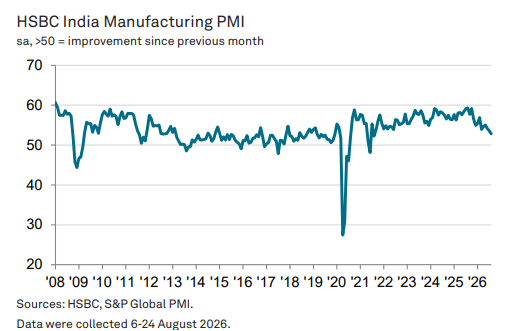
India's manufacturing PMI fell to 52.8 in August from 53.5 in July, marking the weakest growth in five years as new orders and output growth slowed.

HSBC INDIA PMI: India’s manufacturing sector continued to expand in August, but momentum weakened sharply as the HSBC India Manufacturing PMI fell to 52.8 from 53.5 in July. New orders and output growth slowed to five-year lows, while employment declined for the first time in two-and-a-half years. Softer cost pressures, however, helped manufacturers limit selling-price increases.
HSBC INDIA PMI: India’s manufacturing sector remained in expansion territory in August, but growth momentum weakened for the 3rd consecutive month. Softer demand weighed on new orders and output, while manufacturers became more cautious on purchasing and inventories.
Meanwhile, export sales continued to grow and easing input-cost pressures helped limit price increases. Before we get into the PMI data, let us understand what PMI is.
What is Manufacturing PMI and why is it important?
Purchasing Managers’ Index (PMI) is a monthly survey-based indicator that tracks changes in manufacturing activity. HSBC India Manufacturing PMI is compiled from responses from around 400 manufacturers and covers new orders, output, employment, supplier delivery times and stocks of purchases.
The index ranges from 0 to 100, with 50 as the key dividing line. A reading above 50 indicates an overall improvement in manufacturing conditions from the previous month, while a reading below 50 indicates a deterioration. Therefore, 52.8 means manufacturing is still expanding, but the pace of improvement is relatively modest.
PMI is closely watched because it provides a timely monthly indication of economic trends, helping markets assess changes in manufacturing activity before several official economic indicators become available.
What does India's August PMI reading of 52.8 indicate?
HSBC India Manufacturing PMI fell to 52.8 in August from 53.5 in July, extending its decline for the 3rd consecutive month. It marked the weakest improvement in manufacturing conditions in 5 years and was below the long-run average of 54.2.
The reading still remained above 50, meaning manufacturing activity continued to expand. The concern is therefore the loss of momentum, rather than an outright contraction.
READ THIS ALSO: SIF AUM Jumps 5X to ₹10,620 Cr in Six Months: What’s Driving Growth?
Why did manufacturing growth slow in August?
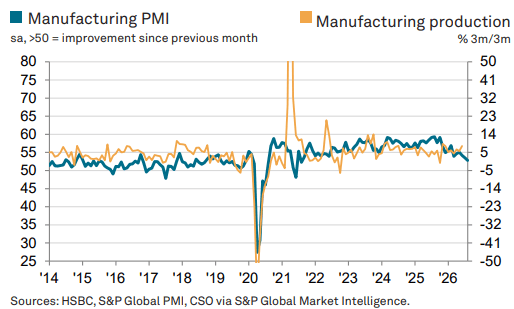
The main reason was weaker demand. New business continued to increase, but at its slowest pace in 5 years, with manufacturers citing challenging market conditions and subdued appetite for some products. Demand softened across 2 of the 3 industrial groups, while consumer goods was the exception.
The weaker order flow also slowed production. Output continued to rise strongly, but growth eased to its weakest level in 5 years, with manufacturers attributing the moderation to softer demand and smaller increases in new orders.
Did exports provide support to manufacturers?
Export sales continued to increase, with gains reported from Australia, Germany, mainland China, Spain, Thailand and the US. However, international-order growth eased from July, suggesting that overseas demand remained supportive but also lost some momentum.
Have cost and pricing pressures eased?
Yes. Although manufacturers continued to face higher costs for steel and transport, overall input-cost inflation eased to a 6 month low.
The softer cost environment helped companies limit price increases. Fewer than 7% of survey participants raised selling charges, while output-charge inflation was slight and slowed to its weakest level in 45 months.
READ THIS ALSO: Mutual Funds Gain Ground in India as Savings and Women Investors Rise
What is the outlook for India's manufacturing sector?
Despite weaker current activity, business expectations improved. Around 16% of survey participants forecast higher output over the coming 12 months, while the remainder expected no change. Confidence rose to its highest level since May, although it remained subdued by historical standards.
Final words
August PMI signals slower manufacturing growth, not contraction. The fall to 52.8, five-year lows in new orders and output, and the first employment decline in two-and-a-half years point to weakening momentum. However, continued export growth, easing input costs and improving confidence provide some support, making the next few PMI readings crucial for the outlook.
All topics
Click the link, confirm the box next to sahi.com is checked — ignore any other results.