
US-Iran Ceasefire: What It Did to Oil, Stocks and Gold Last Night
Oil fell 15% in a single session, Nifty surged 3.64%, and gold climbed, all from one ceasefire announcement. Here's the full breakdown of what happened and what it means for Indian markets.

Trump posted "a whole civilization will die tonight." Markets tanked. Then, ninety minutes before his own deadline, he posted again. Ceasefire. Two weeks. Markets exploded in the opposite direction.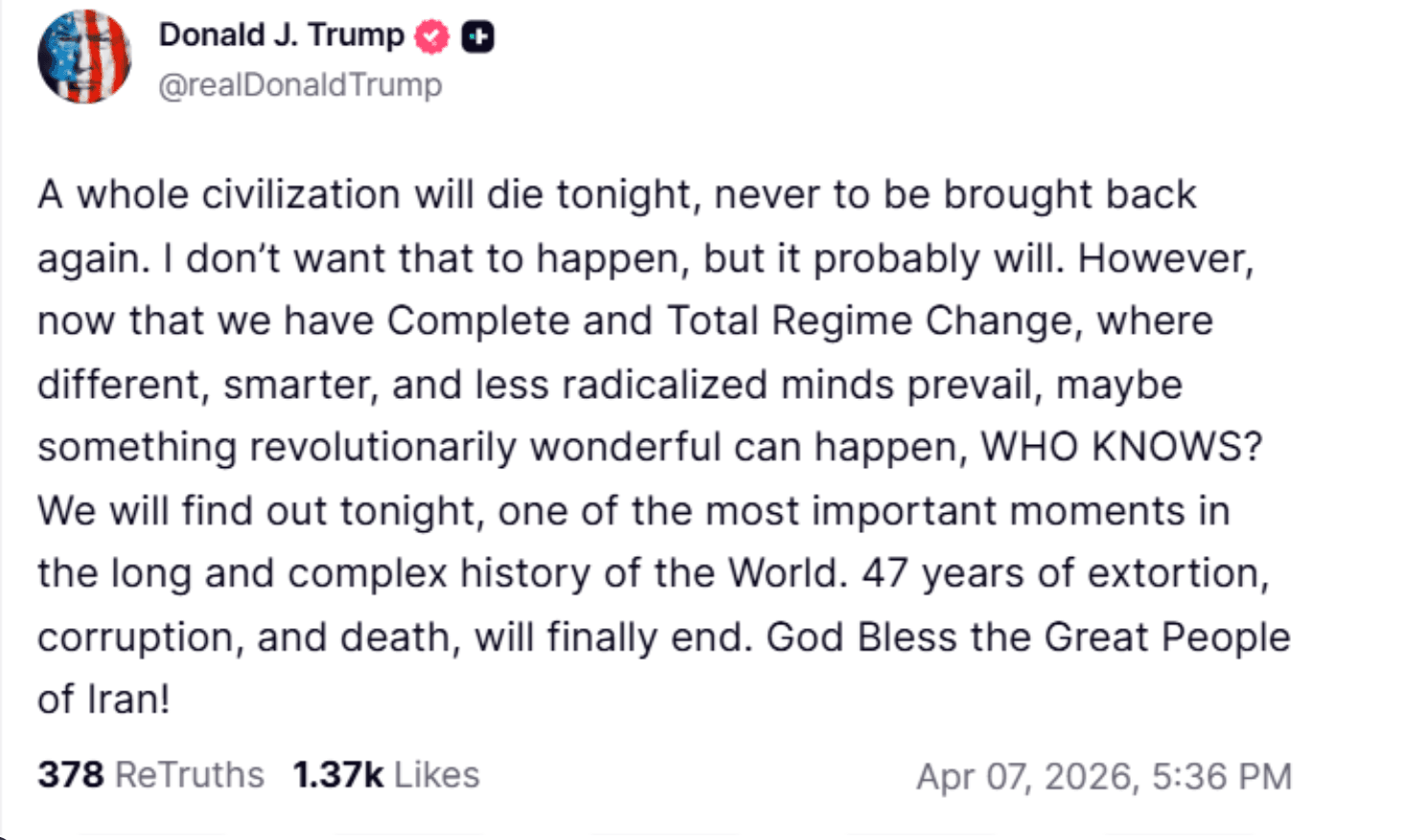
To understand why markets reacted the way they did on the night of April 7–8, you need to go back to where this all started.
How We Got Here
On February 28, 2026, the US and Israel launched coordinated strikes on Iran under Operation Epic Fury, targeting missiles, nuclear infrastructure, naval assets, and IRGC leadership. Supreme Leader Ali Khamenei was killed in the opening hours. The uncomfortable part: just the day before, Omani Foreign Minister Badr Al-Busaidi had appeared on CBS News to say a breakthrough in nuclear talks was within reach, Iran had agreed to never stockpile enriched uranium and to full IAEA verification. The strikes went ahead anyway.
Iran retaliated with hundreds of drones and ballistic missiles across Israel and US bases in Bahrain, Jordan, Kuwait, Qatar, Saudi Arabia, and the UAE. Then came the move that changed everything for global markets: Iran closed the Strait of Hormuz.
The Strait is the world's most critical oil chokepoint, as roughly 20% of global oil supply passes through it. Its effective closure triggered what the IEA described as the largest oil supply shock in history, sending Brent crude from around $70 a barrel before the war to above $110 by early April. We covered what that oil price surge meant for India when Brent crossed $119, the closure had already begun inflicting serious damage on the Indian economy before Tuesday's reversal.
The Five Weeks in Between
March was a grinding, ugly month for markets. Every hint of diplomacy sent oil dipping. Every collapsed negotiation or new strike sent it spiking back. Iran had closed the Strait to adversaries while selectively collecting tolls in Chinese yuan from friendly nations. Mojtaba Khamenei — son of the killed Supreme Leader was elected as Iran's new leader on March 9 and took a hardline stance throughout. The US submitted a supplemental war funding request to Congress. Death tolls mounted. By early April, HRANA, a US-based human rights group, reported more than 3,500 people killed across the conflict, including over 1,600 civilians and children, inside Iran.
Pakistan, meanwhile, had quietly been building itself up as the sole active mediator. Having navigated its own ceasefire with India just a year earlier, Islamabad had credibility with both Washington and Tehran that other countries lacked.
Tuesday: The Most Dramatic Trading Day of 2026
Markets came into Tuesday already on edge. Trump had been escalating his rhetoric all day, threatening to strike Iranian bridges, power plants, and civilian infrastructure unless Tehran reopened the Strait by 8 PM Eastern. He posted on Truth Social that "a whole civilization will die tonight, never to be brought back again."
The S&P 500 fell as much as 1.2% during the regular session as uncertainty spiked. Oil briefly touched $117 a barrel intraday. Gold climbed. Bond yields fell. The dollar strengthened as a haven. Every safe-haven trade was being piled into simultaneously.
Then, ninety minutes before his deadline, Trump posted the ceasefire announcement. Based on conversations with Pakistani PM Shehbaz Sharif and Army Chief Asim Munir, Trump agreed to suspend bombing and attacks on Iran for two weeks, conditional on Iran reopening the Strait of Hormuz completely and immediately. Iran's Foreign Minister Abbas Araghchi confirmed shortly after that safe passage through the Strait would be permitted for two weeks, with vessels coordinating with Iranian armed forces.
What Markets Did the Moment That Hit
The reversal was instantaneous and enormous.
US crude slid more than 16% to below $94 per barrel. A stunning drop after trading as high as $117 earlier that same day. That is a $23 swing within a single session, the biggest single-day drop in oil prices since the 1991 Gulf War. Brent crude fell approximately 13–15% to around $92–95 per barrel.
S&P 500 futures leapt 2.5%, Nasdaq 100 futures jumped 3.3%, and Dow futures surged around 1,100 points. Asia opened and kept going. South Korea's Kospi surged 5.8%. Samsung jumped 7% and SK Hynix, hammered by energy cost fears, jumped nearly 10%. Japan's Nikkei advanced close to 5%.
Spot gold jumped 2.5% and silver rose 4.6%. This sounds counterintuitive but gold often rallies in both directions during geopolitical events. On the way up, it is a fear trade. On the way down, it is a liquidity and inflation trade: lower oil reduces the inflation premium that had been embedded in gold prices. US Treasury yields also declined — meaning bond prices rose. The safe-haven unwind was partial but meaningful.
In India, the Nifty jumped over 3.64% on April 8 as markets opened to the news. We broke down exactly which Indian oil stocks won and which lost from the crude crash, the split between upstream producers and downstream refiners was sharp and immediate.
What This Means Sector by Sector
The biggest immediate winner is aviation. Jet fuel is typically the single largest operating expense for any airline — often 25–40% of total costs. The surge in oil since February had effectively threatened to wipe out profitability across the entire sector. The macro channel through which oil prices affect India's broader economy runs directly through aviation costs, logistics, and the current account.
Shipping and logistics followed closely. Container and tanker rates had been spiking as vessels avoided the Persian Gulf entirely and rerouted around Africa, adding weeks to voyage times and enormous fuel costs. Scores of tankers laden with crude and refined products had been stranded inside the Gulf as of Tuesday. If the Strait genuinely reopens, that backlog moves, freight rates normalise, and global supply chains get some relief.
For India specifically, the implications are significant. The drop in per-barrel oil prices improves India's current account meaningfully, supports the rupee, and gives the RBI more room on rates. Indian equity markets, which had been among the worst performers in Asia through March, stand to benefit disproportionately from sustained oil price relief.
The losers in this rally are the energy producers. Saudi Arabia, the UAE, and OPEC members had been enjoying a windfall throughout the war. The oil price collapse presents significant challenges for OPEC, which faces difficult decisions as Iranian supply potentially returns to market and prices fall below fiscal breakeven levels for many members.
The Honest Read
Here is what traders and analysts are cautioning despite the euphoria.
US crude is still up roughly 47% since the start of the Iran war, even after Tuesday night's crash. The market is not remotely pricing in a full resolution. It is pricing in a pause.
Iran's 10-point proposal demands full removal of all sanctions, release of all frozen Iranian assets abroad, withdrawal of US combat forces from the region, and full compensation for war damages. The US has accepted this as a "workable basis for negotiation" — which is very different from accepting it.
Israel has already clarified that the ceasefire does not include Lebanon, where its ground operations against Hezbollah continue. That is a live conflict with live casualties, and any escalation there could unravel the broader deal quickly.
Iran also said its military will regulate passage through the Strait, granting it unique economic and geopolitical leverage. Ships coordinating with Iranian armed forces to transit an international waterway is not a normal situation. It is a structural shift in regional power that will have implications long after this ceasefire expires.
Talks move to Islamabad on Friday. Pakistan's PM has invited delegations from both sides. The two-week window is genuinely short. If those talks collapse, or if either side conducts strikes and blames the other, every one of these trades reverses just as fast as they moved on Tuesday night.
The dramatic moves in prices are just the latest swings to hit financial markets since late February — because of constantly shifting signals about when the conflict may end. Markets have been on a five-week rollercoaster. This is one more turn, not the exit. We wrote about the Middle East risk your portfolio wasn't pricing in before this escalation — the structural exposure for India hasn't disappeared with one ceasefire announcement.
For now though, the world breathed out. Oil fell. Stocks rallied. And somewhere in Islamabad, the actual work of ending this war is about to begin.
Disclaimer: This article is for informational and educational purposes only and does not constitute investment advice or a recommendation to buy or sell any securities. Market data cited reflects intraday and after-hours levels as of April 7–8, 2026, and are subject to change. Casualty figures are sourced from HRANA and cross-referenced with available media reports as of April 8, 2026, and may be updated as more information becomes available. Please consult a SEBI-registered financial advisor before making any investment decisions. SAHI is not responsible for any investment decisions made based on this content.
Frequently Asked Questions (FAQs)
All topics
Click the link, confirm the box next to sahi.com is checked — ignore any other results.