
HDFC Bank Stock Price Today: What the Chairman's Exit Really Signals
Atanu Chakraborty's resignation over "values and ethics" sent HDFC Bank shares down 10%+ in four days — here's what the AT1 bond scandal, Dubai probe, and board disputes actually mean.

HDFC Bank's chairman resigned on March 19, 2026. The stock fell more than 10% over four trading sessions. That combination — a sudden exit framed around "values and ethics," followed by a sharp selloff — tells you the market is pricing in something more than a routine leadership change.
Here is what the AT-1 bond scandal, the Dubai regulatory ban, the board dispute, and the stock price movement actually add up to.
The resignation: what Atanu Chakraborty actually said
Atanu Chakraborty stepped down as non-executive part-time chairman of HDFC Bank with immediate effect on March 19, 2026. He had been in the role since October 2020.
His resignation letter cited "my values and ethics" as the reason for leaving. That specific phrasing — not health, not personal commitments, not the standard "to pursue other interests" — is what set off alarm bells.
RBI approved Keki Mistry as interim non-executive part-time chairman for a three-month period starting March 19, 2026. Mistry served as Vice Chairman and CEO of HDFC Ltd for many years and is a familiar name in Indian financial markets. His appointment buys the bank time to identify a permanent replacement.
HDFC Bank stock price: the four-day selloff
The stock has been under pressure since the news broke. Here is how it moved:
- March 19 (resignation day): Stock fell sharply as the news circulated after market hours.
- March 20: Continued decline as investors processed the "values and ethics" language.
- March 21: Further selling pressure as the AT-1 bond story received wider coverage.
- March 23: Fell approximately 4% intraday to a low of around ₹ 741, closing at approximately ₹ 744.
- March 24: Partial recovery — opened roughly 3.2% higher, closed around ₹ 761.50, a gain of approximately 2.3% on the day.
Across the four-day decline, HDFC Bank lost over 10% of its market value — roughly ₹ 1.35 lakh crore in market capitalisation wiped out.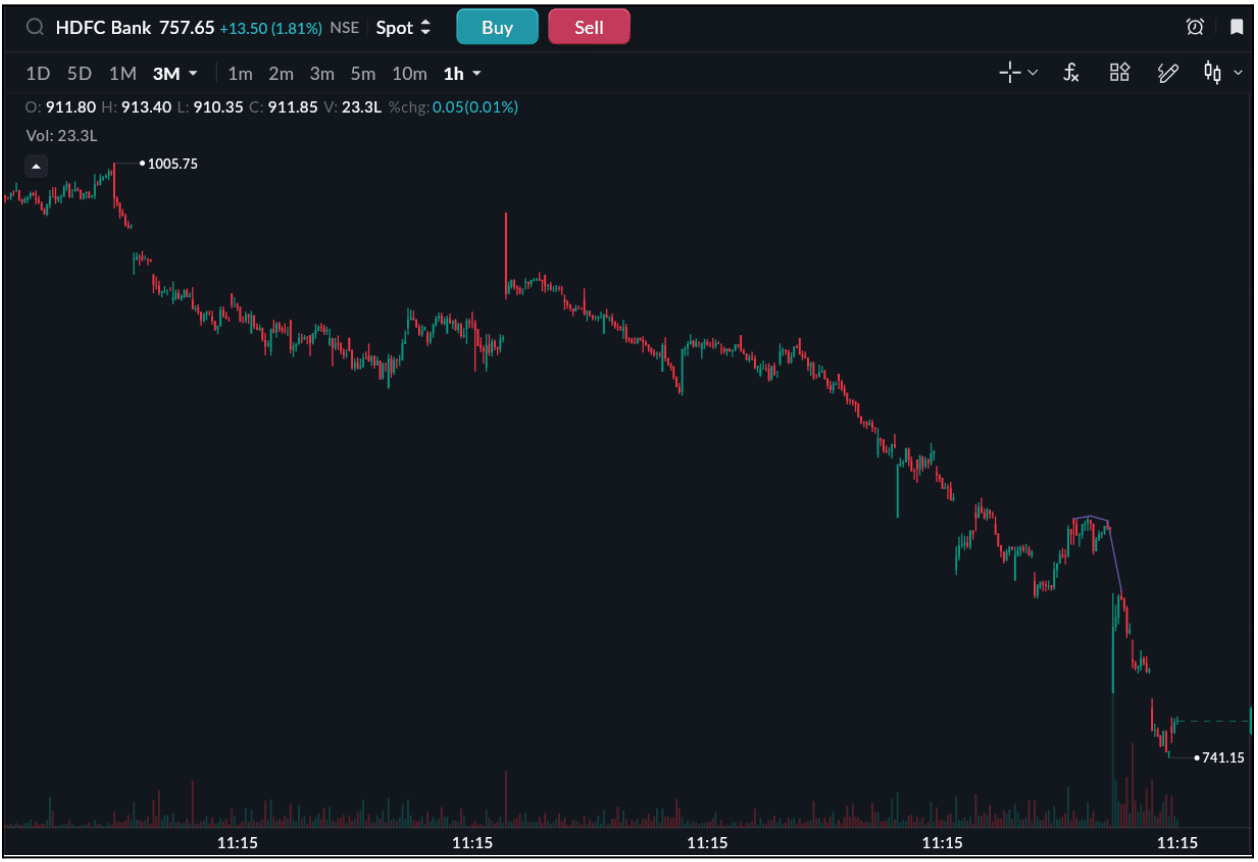
The AT-1 bond mis-selling scandal: what happened in Dubai
The Dubai connection is central to understanding why this resignation hit the stock so hard.
HDFC Bank's branch at the Dubai International Financial Centre (DIFC) was found to have mis-sold AT-1 (Additional Tier-1) bonds to retail clients. AT-1 bonds are hybrid instruments — they count as bank capital but carry features that allow them to be written down or converted to equity if the bank's capital ratios fall below a threshold. They are structurally complex and, in most markets, are supposed to be sold only to sophisticated institutional investors.
The Dubai Financial Services Authority (DFSA), the regulator for the DIFC, investigated the matter and banned HDFC Bank's Dubai operations in September 2025. The ban was specifically related to the AT-1 bond mis-selling, retail clients had been sold instruments they did not fully understand at terms that did not reflect the actual risk.
AT-1 bonds made headlines globally after Credit Suisse's collapse in 2023, when CHF 16 billion worth of AT-1 bonds were written to zero even as equity holders received some value, reversing the usual capital structure. The DIFC episode put HDFC Bank in the category of institutions that had not adequately managed the distribution of these instruments.
The board dispute
The timing of the resignation, and especially the "values and ethics" framing — has led to speculation about internal disagreements at the board level. HDFC Bank has not provided further detail beyond the resignation letter. The bank's management team, led by MD and CEO Sashidhar Jagdishan, remains in place.
The specific nature of any board dispute has not been made public. What is public is that a chairman with nearly six years in the role chose to resign immediately, using language that implicitly signals a values-based conflict rather than a personal or capacity-related reason.
What this means for HDFC Bank as an investment
A few things are worth separating out.
The operational business, loans, deposits, NIMs, asset quality, has not changed because of this event. HDFC Bank's fundamentals: a loan book of over ₹ 25 lakh crore, a deposit base that has been steadily rebuilding, and improving credit metrics after the 2023 merger integration, remain intact.
What has changed is the governance risk premium the market assigns to the stock. When a chairman resigns citing ethics, investors immediately ask: what was the ethics disagreement about? Was it about the Dubai situation? About how that situation was handled internally? About something else that has not surfaced yet?
The market cannot price governance uncertainty precisely, so it prices it broadly, hence a 10% move.
Keki Mistry's appointment as interim chairman is a stabilising signal. He has deep institutional credibility and understands the bank's DNA from the HDFC Ltd side. But three months is a short window, and the board will need to identify a permanent chairman quickly to reduce ongoing uncertainty.
Regulatory context
The DFSA ban in September 2025 was significant in its own right. A ban from a Tier-1 international financial centre is not a minor penalty — it affects HDFC Bank's ability to serve NRI and international clients through that hub and creates reputational friction in global institutional circles.
Whether RBI has separately reviewed the Dubai situation in the context of broader governance oversight is not publicly known. What is known is that the resignation follows, by roughly six months, the Dubai regulatory action, which raises natural questions about whether they are connected.
The stock: where it sits now
At around ₹ 755.50 on March 24, HDFC Bank is trading well below its 52-week highs. The partial recovery on March 24 suggests some buyers stepped in at the lows, viewing the selloff as an overreaction to a governance event rather than a signal of fundamental deterioration.
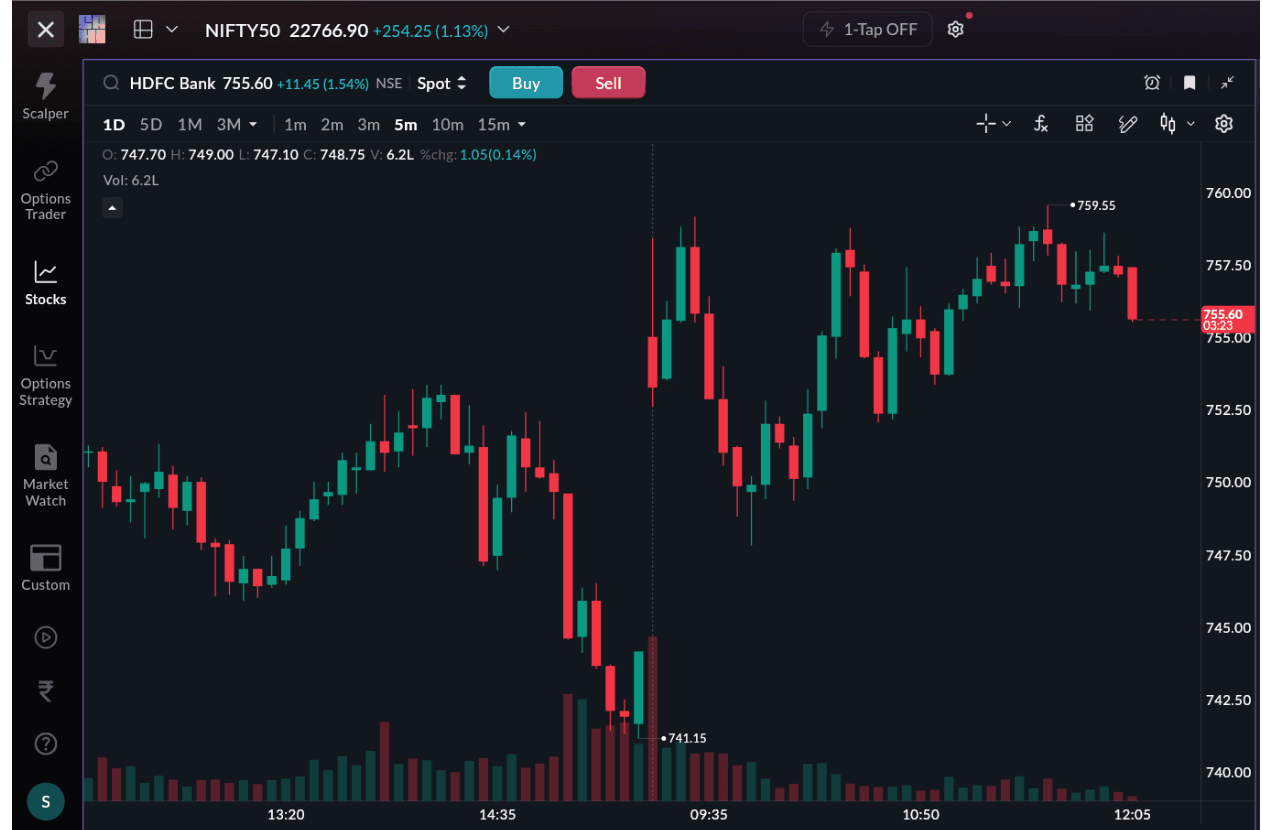
The near-term trajectory will depend on two things: whether more information surfaces about the reasons behind the resignation, and how quickly a credible permanent chairman is announced. If the three-month Keki Mistry period passes without a clear successor, uncertainty will likely resurface.
For long-term investors, the core question remains what it has been for the past two years: whether HDFC Bank can return to the return ratios it maintained before the merger. That answer does not change based on a chairman transition. What changes is the timeline — governance uncertainty adds friction to the re-rating story.
Disclaimer: This article is for informational purposes only and does not constitute financial advice. Please consult a SEBI-registered advisor before making investment decisions.