
Vedanta Shares Hit Record High as Demerger Date Nears: What Is Driving the Rally?
Vedanta fixes May 1, 2026 as demerger record date, splitting into 5 listed companies — here's what shareholders need to know about the 227% rally and the restructuring plan.

Vedanta Ltd has once again grabbed market attention after its shares climbed to a fresh all-time high of ₹795 on the NSE (₹794.90 on BSE) on April 21, 2026, gaining over 3% in intraday trade. The rally came after the company officially fixed May 1, 2026, as both the record date and effective date for its much-awaited demerger plan, marking a major milestone in one of India's biggest corporate restructuring exercises in the metals and mining sector.
The stock has been on a strong run. In April alone, Vedanta shares surged around 26%. Since the beginning of calendar year 2026, the stock has risen roughly 13% (as of April 21, 2026), significantly outperforming the broader market. During the same period, the BSE Sensex declined approximately 7%, while the BSE Metal Index gained around 14%.
What Is Vedanta's Demerger Plan?
Vedanta first announced its demerger proposal on September 29, 2023, with the objective of separating its diverse businesses into independent listed companies. The goal being sharper strategic focus and clearer valuation visibility for each segment.
The original proposal envisaged six standalone entities. Following a structural revision, the final approved scheme reorganises Vedanta's businesses into five separate companies. Four newly demerged entities and the restructured Vedanta Ltd.
The Mumbai bench of the National Company Law Tribunal (NCLT) approved the scheme on December 16, 2025, for most businesses and on January 9, 2026, for the power division.
Under the approved structure, shareholders will receive one share each in the following four entities for every one Vedanta share held on the record date:
- Vedanta Aluminium Metal Ltd — aluminium business
- Talwandi Sabo Power Ltd (to be rebranded Vedanta Power) — power assets
- Malco Energy Ltd (to be rebranded Vedanta Oil and Gas) — oil and gas exploration
- Vedanta Iron and Steel Ltd — iron ore and steel
The restructured Vedanta Ltd will retain the base metals business, including its major zinc and silver assets through Hindustan Zinc, and is expected to serve as an incubator for future ventures.
Why the Market Is Reacting Positively
Corporate demergers often attract market interest because profitable businesses in conglomerates can get undervalued when bundled with unrelated segments. Vedanta's restructuring could unlock value by allowing the market to independently price businesses such as aluminum, power, and oil & gas—each with different growth cycles, capital requirements, and risk profiles. Separate listings may help investors choose sector-specific exposure rather than buying into a mixed conglomerate structure.
The announcement of the record date also removes a layer of uncertainty that had been building for nearly three years. Markets generally reward clarity, particularly when large restructuring plans face extended delays. However, after touching its intraday all-time high, the stock pared some gains and was trading around 0.35% lower by afternoon on April 21.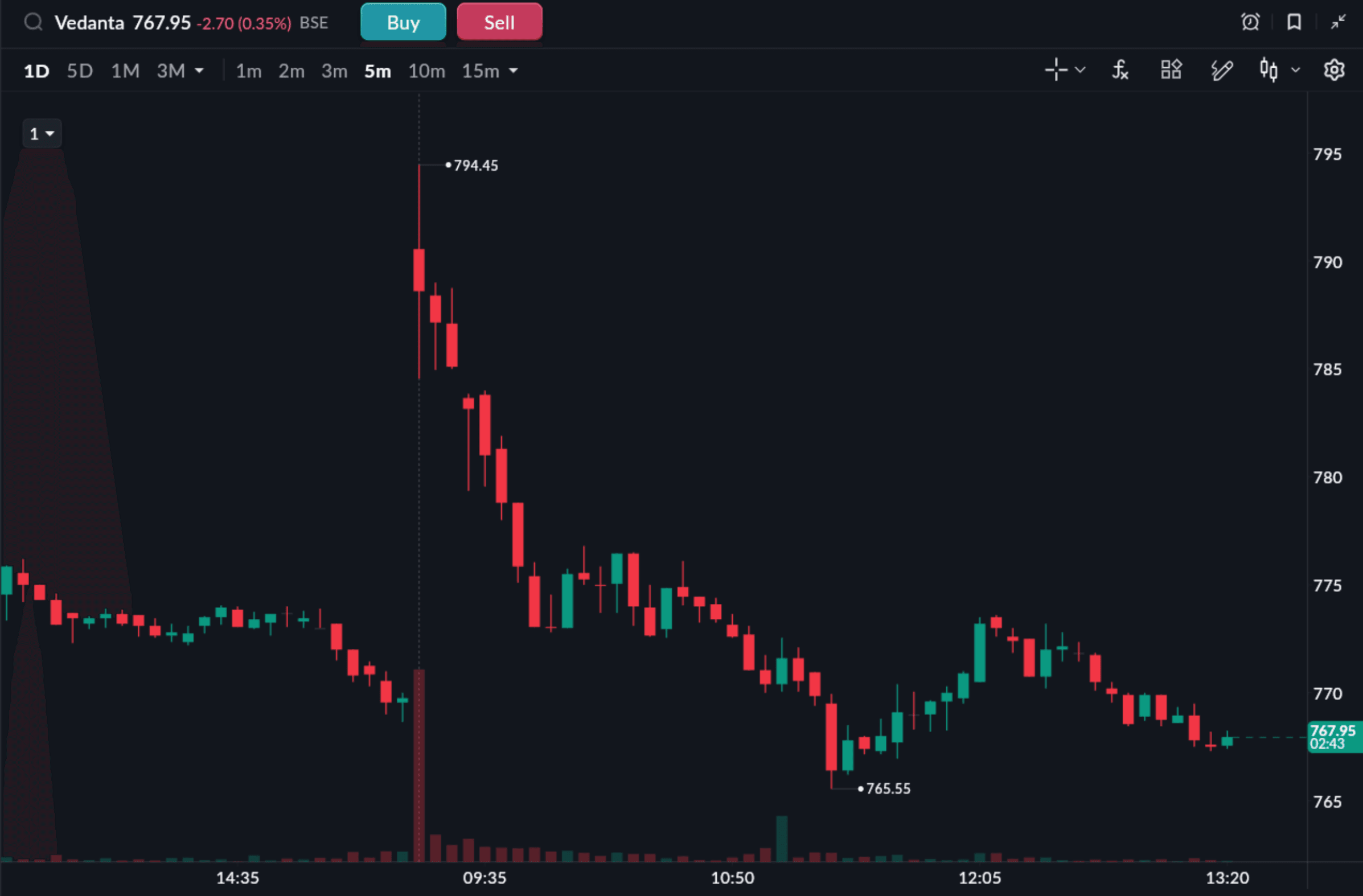
A Long Journey to Execution
Vedanta's demerger has not been a quick process. After the September 2023 announcement, the plan went through multiple regulatory reviews and structural changes. Notably, the base metals business, originally planned as a sixth separate entity, was retained within the restructured Vedanta Ltd under the revised scheme.
With NCLT clearance in place and the effective date now set, the listing process for the four newly created entities is expected to follow, with all companies likely to be listed by mid-May 2026.
What Investors May Watch Next
With the record date confirmed, attention is likely to shift to listing timelines for the newly created entities and how the market values each business once they begin trading independently.
Performance after the split will also remain in focus. While a demerger reshapes corporate structure, the long-term trajectory of each entity will depend on earnings growth, balance sheet strength, commodity price cycles, and operational execution.